Amsterdam 2026: 15 Best Things to Do (An Experienced Local Guide)
After nearly three decades living in the city center—and guiding visitors through the best things to do in Amsterdam since 2011—I can tell you one thing for certain. Most people looking for things to do in Amsterdam arrive with the completely wrong idea of what this city actually is.
Yes, there is a reputation for nightlife and coffeeshops. But if that’s all you see, you’re missing what makes this one of the most fascinating cities in Europe.
This is a place shaped by trade, tolerance, and centuries of global influence. It’s a city where 17th-century canal houses still lean over the water and where every neighborhood has its own rhythm—from the high-end quiet of the Old South to the gritty, creative energy of Amsterdam North.
Looking for something more unique? Check out my guide to the Crazy and Unusual things to do in Amsterdam for experiences like the Crane Hotel or Micropia.
The problem? Most travel lists either overwhelm you with endless options or send you to “tourist traps” that aren’t worth your time. After guiding thousands of visitors here, I’ve seen the same mistakes again and again:
- Spending too long in the most crowded, “cliché” areas.
- Missing incredible spots just a few streets away.
- Following generic advice that doesn’t reflect how the city actually works in 2026.
This guide is different. Instead of listing everything, I’ll show you the experiences that are truly worth it, how to see them like a local, and the tips that will completely change your trip.
If you are looking for hotels in Amsterdam check for this hotels options in Booking or Expedia.
👉 Planning a Visit to Amsterdam? Book the some of the best Amsterdam rated tours or best Amsterdam rated experiences
👉 Find Amazing Hotels in Amsterdam

💡 Quick Amsterdam Travel Tips (From a 30-Year Resident)
- Getting In from Schiphol: Skip taxis and Uber. The direct train from Schiphol Airport to Amsterdam Centraal takes just 14–17 minutes, runs 24/7, and drops you right in the city center.
- Getting Around: Walking is by far the best way to see the city. For public transit (trams, buses, metros, and GVB ferries), you don’t need a special transit card anymore—just tap your contactless credit card, debit card, or smartphone at the gates (OVpay).( This is cheaper than buying a physical GVB card )
- Biking Truth: Unless you are an extremely confident cyclist, do not rent a bike during your first two days in the city center. Main canal paths and intersections are fast-paced, highly regulated, and busy. Get your bearings on foot first.
- Money & Tipping: Amsterdam is almost entirely cashless. Credit and debit cards are accepted everywhere (even for small street market buys). Tipping is appreciated for good service, but not mandatory—rounding up or leaving 5%–10% is standard local practice.
- Where to Stay: For classic canal charm that is quiet at night, look at the Jordaan or the Western Canal Belt. If you want a more modern, creative neighborhood away from the crowds, stay in Amsterdam Noord (a quick, free 5-minute ferry ride behind Central Station).
Quick Answer: What are the best things to do in Amsterdam?
Short on time? These are the experiences that truly capture Amsterdam in 2026:
- Step into History: Visit the Anne Frank House (⚠️ Tickets release every Tuesday at 10:00 AM CET for 6 weeks out—they sell out in hours) and the Rijksmuseum (book 2 weeks ahead).
- See the City from the Water: A canal cruise through the UNESCO Canal Belt. Local Pro Tip: Book the “Golden Hour” (sunset) for the best photos.
- Feel the Creative Vibe: Hop on the free ferry to Amsterdam Noord to explore Eye Film Museum.
- Slow Down in Nature: Rent a bike and ride through Vondelpark or Westerpark (the local favorite for fewer crowds).
- The Best Free View: Skip the paid towers and head to the top floor of the OBA Library near Central Station.
15 Best Things to Do in Amsterdam (Local Tips Included)
1. Get Oriented First: Walking Tours vs. Exploring on Your Own
After almost three decades living in Amsterdam and many years guiding people around the city, there’s one thing I see again and again: People arrive… and immediately start rushing.
They go straight to ticking boxes—museum, canal, photo, next. I get it. You’re excited. But Amsterdam doesn’t really work like that. On a map, it looks small; in reality, it’s a beautiful, swirling labyrinth of canals that all look the same until they don’t.
Before you dive into the “Top 10” lists, just slow down for a moment. The best thing you can do first is simply get a feel for the city’s rhythm.
I strongly advise against this. Here is the local truth:
- The 2-Hour “Sweet Spot”: After 15 years of guiding, I’ve learned that 1.5 to 2 hours is the perfect amount of time. You get the history, the layout, and the “lightbulb” moments without the exhaustion. Amsterdam is a sensory-heavy city; you want to finish your tour with energy to actually explore, not looking for the nearest place to nap. Here a very good private intro tour to Amsterdam and it you prefer a shared experience you can check the top rated group tour alternative.
- Don’t Pay to “Meet Locals”: Some tours charge a premium to “introduce you to locals.” As a 30-year resident, I find this incredibly artificial. A local who is paid to meet you for 15 minutes is part of a staged performance, not a real connection.
- The “Organic” Alternative: You don’t find the soul of Amsterdam in a scheduled meet-and-greet. You find it by grabbing a coffee at Ten Katemarkt, sharing a bench in Westerpark, or having a casual chat at a Brown Café. Real Dutch culture is direct and organic—it shouldn’t be a paid tourist attraction.
Local’s Choice: Start with a punchy 90-minute morning tour to ground yourself. Once the “map” in your head makes sense, put your phone away and get lost. That is when the real Amsterdam happens.
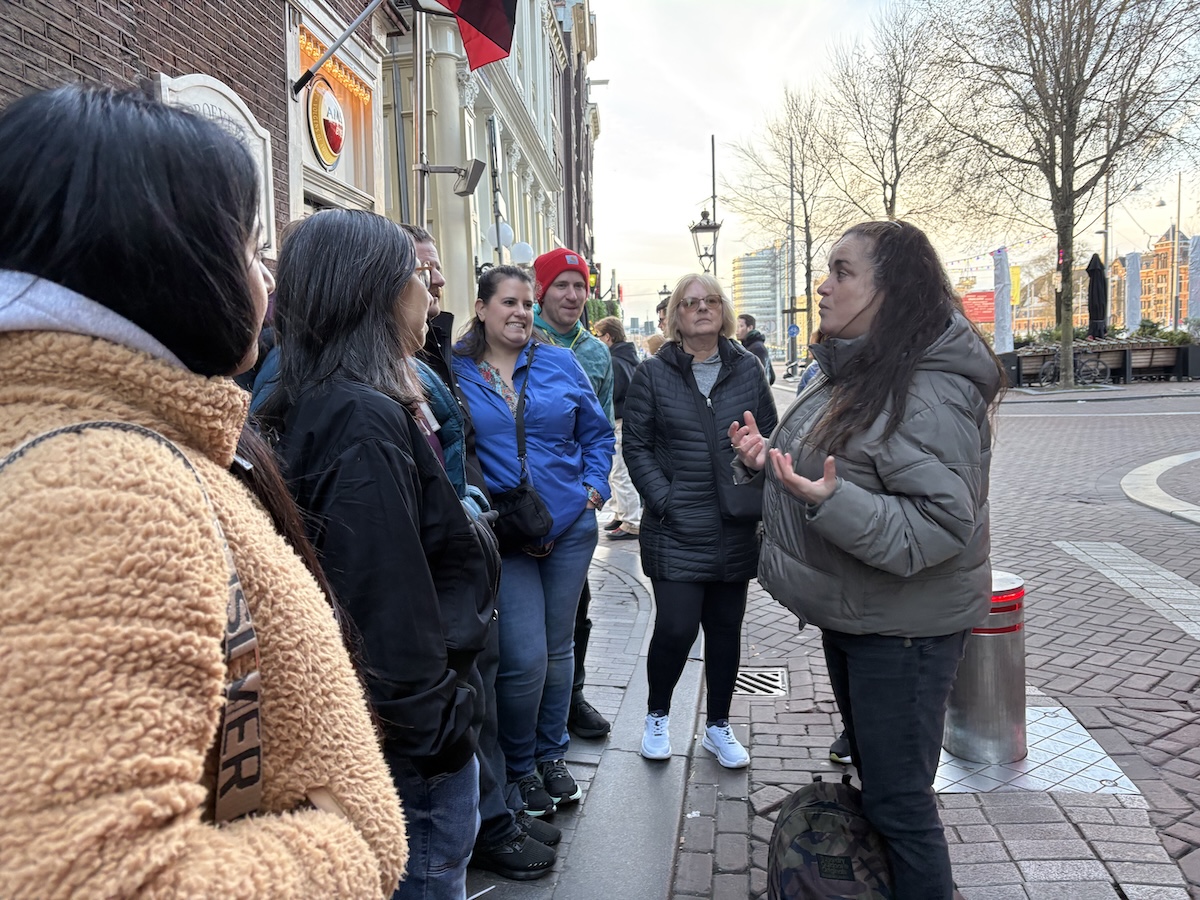
Choose Your Path:
- Option 1: The Guided Shortcut (Best for Context) A walking tour makes the city “click.” You’ll understand why the houses lean and how to avoid the tourist traps. If you explore without context, you’ll see a lot but understand very little.
- Option 2: The “Get Lost” Method (Best for Solo Discovery) Amsterdam is incredibly walkable. Sometimes the best moments happen when you turn down a quiet canal or find a hidden courtyard. Just be aware: you might walk past 400 years of history and never even notice it.
- Option 3: The Local’s Choice (The Hybrid) This is what I recommend to my own guests: Spend your first morning wandering aimlessly to feel the scale of the alleys and the light on the water. Then, take a 90-minute tour to layer the history over what you just saw. This turns “sights” into “stories.”
2. Take a Canal Cruise (Do It Right)
I know… canal cruises can feel a bit touristy.
You see the big boats, packed with people, all following each other in a line, and it doesn’t exactly scream “authentic experience”.
I thought the same for years.
But here’s the thing — I actually worked part-time as a canal cruise guide part time for 6 years for Amsterdam Blue Boat company, and it completely changed how I see them. The boat captains for this company are very experience and they know the local mouth to mouth stories that you usually cannot find anywhere else. My favorite way to explore the canals by boat is on a wine and cheese Amsterdam canal cruise.
👉 Done right, a canal cruise is one of the best ways to understand Amsterdam.
From the water, you see things you simply don’t see from the street — how the canal houses are built, how everything connects, how the city was designed. It gives you perspective.
But the key is how you do it.

First rule: don’t go too short
If there’s one mistake I see people make, it’s booking the shortest option.
👉 Anything under 90 minutes is usually too rushed.
You’ll be on and off the boat before you’ve really seen much, and you’ll only cover a small part of the canals.
With around 90 minutes, you:
- get beyond just the main tourist loop
- see different parts of the canal belt
- and actually have time to relax and take it in
Second rule: timing makes a huge difference
Midday cruises are the busiest — more boats, more noise, less atmosphere.
If you can, go:
- early in the morning, or
- later in the afternoon / evening
That’s when the canals feel calmer, and the whole experience is just… better.
Third rule: smaller is usually better
The big boats are fine, but they can feel a bit impersonal.
If you want something more relaxed:
- look for smaller boats
- fewer people
- something a bit quieter
It makes a big difference in how much you enjoy it.
What most people don’t realize
When you walk around Amsterdam, you’re always at street level.
But this city was built around water.
👉 Seeing it from the canals is not just a “nice extra” — it actually helps you understand how Amsterdam works.
If you pick the right time, the right length, and the right type of boat, a canal cruise stops being “just another tourist thing”…
…and becomes one of the highlights of your trip.
Mention that my favourite after having guided many canal tours is the golden hour
3. Walk the Canal Belt
When you’re walking here, it’s easy to think it’s just… nice canals.
But this whole area was actually planned very deliberately.
Back in the 17th century, Amsterdam was booming. Ships coming in from everywhere, trade exploding, the city growing fast — and they basically had to figure out how to expand without turning it into chaos.
So instead of growing randomly, they designed these canals in a kind of semicircle around the old city.
Not just to make it look good — but to move goods, control the water, and also, let’s be honest, to show wealth.
Because where you lived here mattered.

👉 The closer you were to the inner canals, the richer you were.
The merchants built those tall, narrow houses you see everywhere. And the canals were like their front door — goods arrived by boat, straight into the house.
Those hooks at the top of the buildings? That’s how everything got inside. The stairs were (and still are) way too narrow to carry anything up.
And the funny thing is… not much has changed.
The layout you’re walking through now is basically the same as it was 400 years ago.
👉 That’s why it ended up being listed as a UNESCO World Heritage Site.
Not just because it looks good — but because it’s such a well-preserved example of how a city was designed at that time.
4. Take Reflection Photos of the Canals
This is one of those things people walk past without really noticing.
You’ll see the canals, take a photo, and move on… but if you pause for a second, you’ll realize it’s not just about what’s in front of you — it’s also what’s in the water.
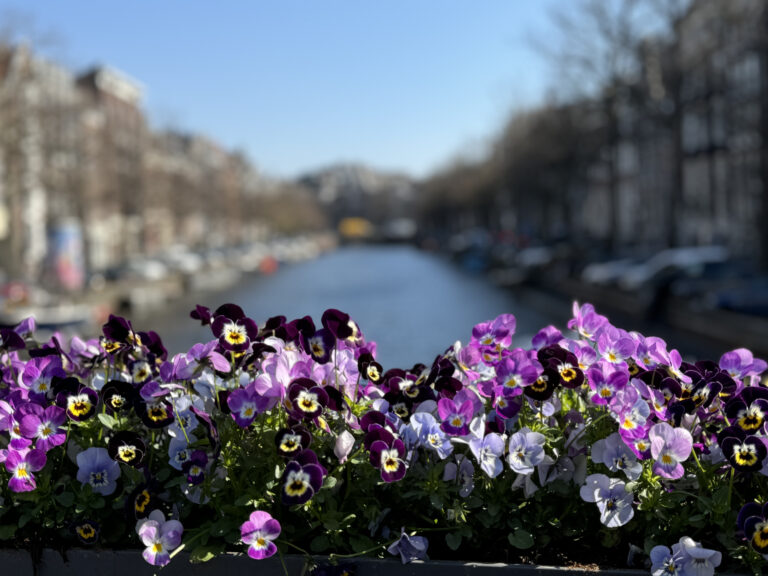
When the canals are still, everything reflects back. The houses, the bridges, the sky… sometimes it actually looks better in the reflection than in real life.
But timing really matters here.
In the middle of the day, there are boats going by all the time, so the water is constantly moving and you won’t get that effect.
👉 The best moment is early in the morning or later in the evening, when things calm down.
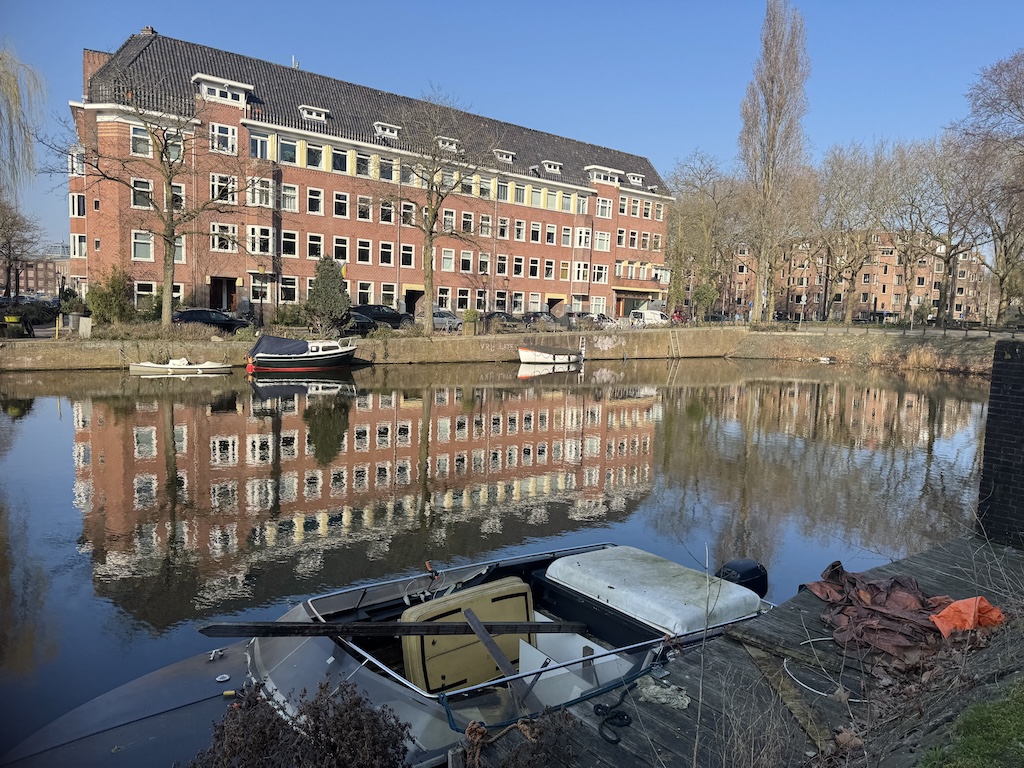
Find a quieter canal, stand on a bridge, and just wait a bit.
After a few seconds, the water settles… and the reflection appears.
It’s simple, but once you notice it, you start seeing it everywhere.
And your photos suddenly look completely different.
So yeah, it’s beautiful.
But it’s also kind of like walking through a blueprint of how Amsterdam became what it is today.
Love these tips? I’ve pinned these exact spots—plus 40 secret ones I don’t share online—on my interactive Amsterdam Map. Take my 27 years of expertise in your pocket.
5. See Amsterdam from Above (Best Views)
Amsterdam is beautiful when you’re walking around it… but when you see it from above, everything suddenly makes more sense.
You start to see the curves of the canals, how compact the city really is, and how everything fits together.
You don’t need to go crazy with viewpoints either — a few well-chosen spots are more than enough.
OBA Amsterdam (Central Library)
This is probably the easiest and most underrated view in the city.
Go up to the top floor — there’s a terrace and a café — and you get a wide view over the center and the water.
It’s relaxed, not overly touristy, and you can just sit there for a while without feeling rushed.
Blue Amsterdam (Kalvertoren)
Right in the middle of the city, but most people don’t even know it’s there.
You take the elevator up, and suddenly you’re above the rooftops, looking out over the historic center. Check always their website as some time is busy and you need to book your spot.
It’s a nice stop if you’re already exploring the area — quick, easy, and a different perspective without going out of your way.
LuminAir Amsterdam (rooftop bar)
If you want something a bit more special, this is a good one.
Luminair is a rooftop bar with views over the city, especially nice towards sunset when the light starts to change.
It’s more of an experience than just a viewpoint — you stay a bit longer, have a drink, and watch the city shift from day to evening.
6. Amsterdam Noord: The Best “Off the Beaten Track” Experience
One of the best-kept secrets for first-time visitors is the free ferry behind Central Station. Take the “Buiksloterweg” line (it only takes 3 minutes) to reach the Eye Film Museum.
Even if you don’t go inside for a movie, the building itself is an architectural masterpiece. From the terrace, you get one of the most stunning, wide-angle views of the Amsterdam skyline and the passing ships on the IJ River. It’s the perfect spot for a coffee with a view away from the crowded city center.
Looking for something a bit more adventurous once you’re across the water? Check out my guide to the most unique and crazy things to do in Amsterdam North.


Local Tip
Local Tip You don’t actually need a museum ticket to enjoy the architecture or the view. Just walk into the Eye Bar Restaurant inside the building. It has massive tiered seating and floor-to-ceiling windows overlooking the water. It’s one of the best spots in the city to sit with a coffee and watch the massive ships pass by on the IJ river. If the weather is nice, their outdoor terrace puts you right on the water’s edge—it’s a 5-star view for the price of a drink.
7. Explore the Jordaan
If you want to see a different side of Amsterdam — slower, more local, less chaotic — this is where you go.
The Jordaan is right next to the canal belt, but it feels completely different.
It didn’t start as a “nice” neighborhood. Back in the day, this was a working-class area, built for the people who worked for the wealthy merchants living along the main canals. Small houses, narrow streets, a lot of people living close together.

Over time, things changed.
Today, it’s one of the most pleasant areas to walk in the city.
What makes the Jordaan special is not one big attraction.
It’s the feeling of the place.
You walk along the smaller canals, pass little cafés, independent shops, quiet streets… and it just feels more relaxed. Less like you’re sightseeing, more like you’re actually in the city.
👉 This is where you slow down a bit.
8. Relax in Amsterdam Parks
Everyone goes to Vondelpark.
And yes, it’s nice. Especially on a sunny day.
But if you stop there, you’re missing a big part of how locals actually use the city.
👉 Amsterdam is not just canals — it’s also green.
If you want something a bit more local, head to Westerpark.
This is where people actually hang out.
It’s not just a park — it’s a mix of green space, old industrial buildings, cafés, small events… a bit of everything. You’ll see people working on laptops, meeting friends, grabbing food, just spending the day.
It feels more like real life than a “must-see”.
And if you really want to get out of the city for a while, go to Amsterdamse Bos.
This one surprises people.
It’s huge — more like a forest than a park — and you can easily spend hours there without seeing many tourists. Rent a bike, walk, sit by the water… it doesn’t even feel like you’re in Amsterdam anymore.
9. Visit a Real Local Market (Skip the Albert Cuyp)
Markets are a big part of daily life in Amsterdam.
But where you go makes a difference.
Most people end up at the Albert Cuyp Market in De Pijp because it’s the most famous one.
And yes, it’s lively… but these days it’s also quite touristy. A lot of stalls are more about souvenirs than actual food.
👉 If you want something that feels more real, go to the Ten Katemarkt instead.
It’s smaller, more relaxed, and this is where locals actually shop — cheese, olives, fresh bread, quick street food.
You don’t feel like you’re walking through a tourist attraction. It just feels like the city.
If you can, go on a Saturday morning when it’s at its best.
And then, just around the corner, you’ve got De Hallen Amsterdam.
It used to be a tram depot, and now it’s a mix of cinema, small shops, and the Foodhallen — perfect if you want to sit down and try a few different things (or if the weather turns, which it often does).
10. Experience a Brown Café
At some point, just step into a brown café.
These are the traditional Dutch pubs — dark wood, a bit worn, nothing polished… and that’s exactly the point. You go there to sit, have a drink, and slow down a bit.
No music blasting, no rush. Just people talking, reading the newspaper, or staring out at the canal.
One of my favorite spots is Café ‘t Smalle, right on the corner of the Egelantiersgracht.
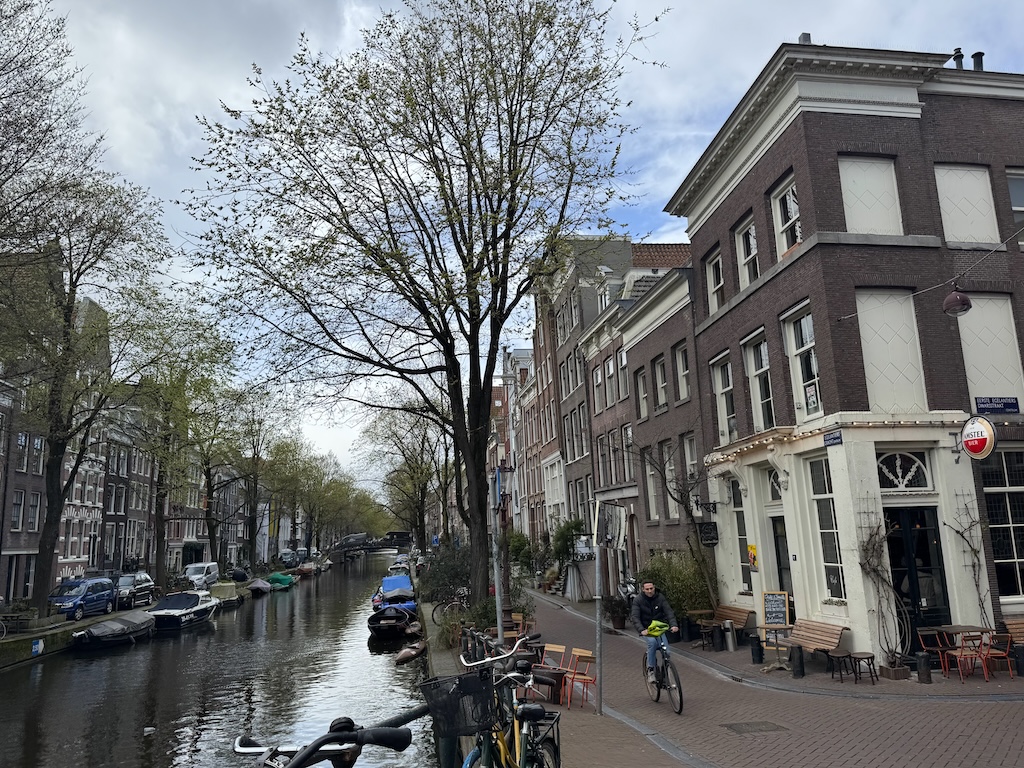

It’s easy to miss if you’re just walking by, but if you look inside, you’ll immediately get it — small, cozy, locals at the bar, that warm light that makes you want to stay longer than you planned.
If the weather is good, sit outside by the water. It’s one of those simple Amsterdam moments that just works.
11. Try Dutch Food
Don’t expect fine dining—that’s not what Dutch food is about.
It’s simple, filling, and honestly a bit underrated if you know what to try.
Start with the basics. Get a stroopwafel (fresh from a market if you can), try some bitterballen with a beer, and don’t leave without tasting Dutch fries with mayo in the oldest and best fries shop in Amsterdam. There are many Tik Tok viral fries shop in Amsterdam these days that are very new and not really worth, just head to the Voetboogstraat and get the real local vibe. Yes, mayo—just trust it. If you want something more local, go for haring. It’s raw herring, and not everyone is brave enough, but it’s a very Dutch experience.
12. Visit the Red Light District (Smartly)
Yes, you should go. It’s one of the oldest parts of Amsterdam and a big part of the city’s history. It is as beautiful during the day as in the night.
But don’t go there like a tourist who just showed up to stare.
This is still a working area. People live here, people work here. If you treat it like a theme park, you’re missing the point—and honestly, it’s disrespectful.
Local tip: Go for a coffee at the Schekenrij, an oasis of tranquility in the city center and located in the oldest building in the city. Coffee and cafes are delicious and it is a great place to start the day.
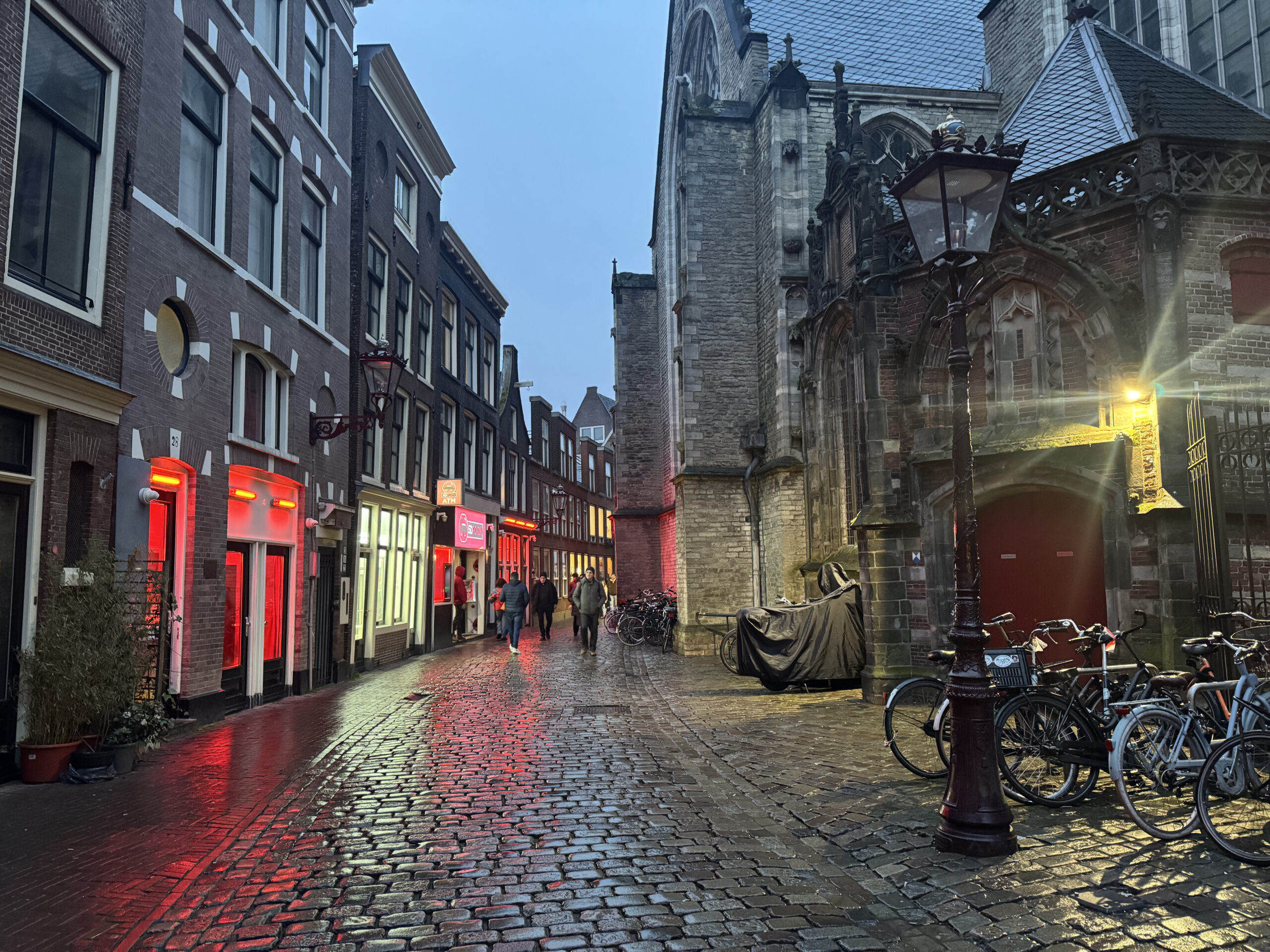
Go during the day first. Walk around, look at the buildings, notice how close everything is. It’s actually a beautiful part of the city once you look past the obvious.
If you go at night, just be aware it gets crowded and chaotic. And if you actually want to understand what you’re looking at—not just walk through it—I’ve written a full guide here
Or, if you want to explore the haunted history of these alleys on your own, check out my Haunted Amsterdam Ghost Walk
13. Discover the Jewish Quarter
This is one of the most important areas in Amsterdam, and a lot of people either rush it or skip it completely.
Take your time here.
You’ve got places like the Portuguese Synagogue and the Jewish Museum, but even just walking around already tells you a lot. It feels different from the rest of the city—quieter, more serious.

It’s not next to the Anne Frank House, so you actually have to make a bit of an effort to come here. Most tourists don’t.
And that’s exactly why you should.
14. See the Tulips (Seasonal) or Visit Hortus Botanicus (All Year)
If you’re here in spring, go see the tulips. That’s the moment—late March to early May, and it doesn’t last long.
But if you’re not here in that window, don’t worry. Just go to the Hortus Botanicus.
It’s right in the city, quiet, and easy to visit. No crowds, no planning, and you still get that “flowers in Amsterdam” feeling without chasing the season.
So yes—tulips if you’re lucky with timing. You can visit my Amsterdam in Spring guide if you are visiting during tulip season. If not, Hortus.