City of the Dead Egypt: Visiting Cairo’s Necropolis
I visited the City of the Dead in Cairo, Egypt, also know as Al Qarafa on my own—and honestly, I was nervous at first. Most people talk about it like a “no-go” zone, and I couldn’t find any tours the day I went. But it was a festive day in Cairo, the atmosphere felt calm, and instead of overthinking it, I just ordered an Uber and went.
The City of the Dead El Cairo isn’t a typical attraction—it’s a real neighborhood where people live among centuries-old tombs. And yes, it’s absolutely possible to visit without a guide. I was there in April, walking around freely, and what I found was not danger, but daily life: families, small shops, quiet streets, and a surprisingly welcoming environment.
What makes this place unique is exactly that contrast—history and everyday life existing side by side. It’s not a polished tourist site, and that’s precisely why the experience feels so real.

Video: Walking Through Cairo’s City of the Dead
A raw, unfiltered look at what it’s really like to explore this unique neighborhood.
What Is the City of the Dead in Egypt?
The City of the Dead in Egypt sounds intense—but when you’re actually there, it doesn’t feel the way you’d expect. It’s a huge historic cemetery in Cairo, but it’s also a place where people live their everyday lives.
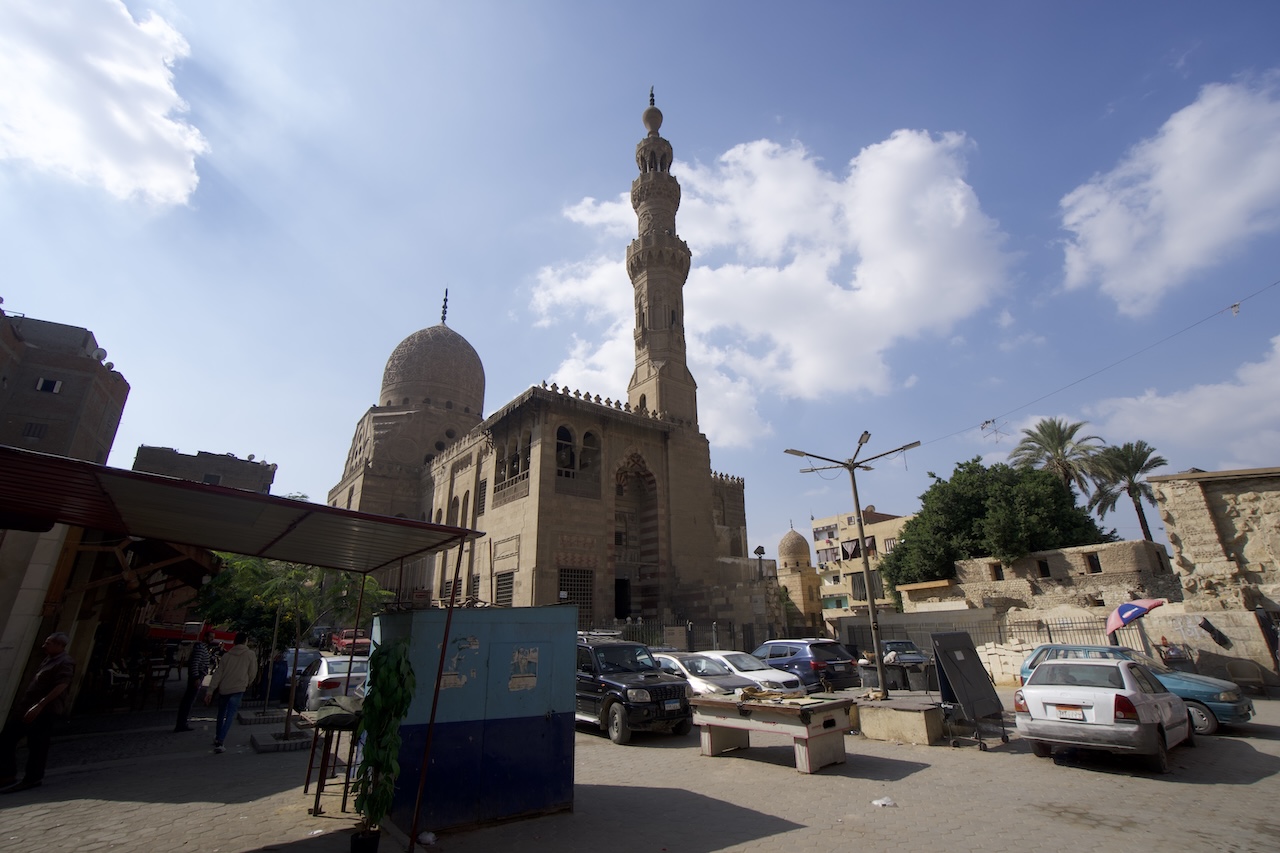
This area was originally built as a necropolis, with tombs, mausoleums, and mosques going back hundreds—sometimes over a thousand—years. Many of these tombs are surprisingly large, almost like small houses, with rooms and courtyards. And over time, that’s exactly what they became.

Today, families live here. You’ll see kids playing, people sitting outside chatting, small shops open, life just… happening. It doesn’t feel abandoned or spooky. If anything, it feels quiet, local, and a bit surreal once you realize where you are.
That’s what makes the City of the Dead so different. It’s not just a cemetery, and it’s not just a neighborhood—it’s both at the same time, and that’s something you don’t really understand until you see it for yourself.
Where Is the City of the Dead in Cairo?
The City of the Dead in Cairo is much closer to the center of Cairo than most people expect. It’s not somewhere far outside the city—you’re still very much in Cairo, just in a completely different setting.
It sits near major landmarks like the Citadel of Saladin and the Al-Azhar Mosque, which makes the contrast even stronger. One moment you’re in busy streets, and a few minutes later everything feels quieter and more local.

The area itself is huge and usually divided into two parts: the Northern Cemetery, known for its historic monuments, and the Southern Cemetery, which feels more residential today.
What stands out is how easy it is to reach. There’s no long journey—you just arrive, and suddenly you’re seeing a side of Cairo that most visitors completely miss
Why Do People Live in the City of the Dead?
I remember thinking this before going—why would anyone actually live here?
But once you’re there, it’s not that hard to understand.
The main reason is housing. Cairo is massive and keeps growing, and not everyone can afford a normal place to live. At the same time, a lot of these tombs are big. They’re not just small graves—they have rooms, sometimes even a courtyard. So people started using them as homes.
And it’s not something new. Some families have been there for years, even generations. In some cases, they were already connected to the area, taking care of tombs or working nearby, and they just stayed.

What struck me is that it doesn’t feel temporary. You see normal life—people sitting outside, kids playing, someone cooking, a small shop open. Nothing feels staged or unusual.
It just feels like a neighborhood.
Is the City of the Dead Egypt Safe to Visit?
Before going, I had read quite a few things online saying the City of the Dead in Egypt wasn’t safe. So yes—I was a bit on edge when I arrived.
And to be fair, I did feel at times that not everyone was comfortable with me being there. I was the only foreigner around, and you notice that. But at the same time, most people were actually really kind.
What stayed with me is how welcoming some locals were. I got invited inside two different homes, and in one of them I ended up having dinner with a family. It was a very simple, genuine moment. They were incredibly respectful, and so was I—during dinner I didn’t take any photos or videos, especially as the women had uncovered their heads while we were eating. It just didn’t feel right to turn that into content.

So was it safe? From my experience—yes. It didn’t feel dangerous. It felt like being in a place where you need to be respectful, aware, and understand that you’re entering people’s daily lives, not a tourist attraction.
That’s really the key difference. If you go expecting a “sight,” you’ll feel out of place. If you go with respect, it can turn into something completely different.
My Experience Visiting the City of the Dead (Solo)
I went on my own, which I know is not what most people do. I had looked for tours and couldn’t really find anything that felt right, so in the end I just decided to go and see for myself.
When I arrived, the first thing I noticed is that it didn’t feel how I expected. It wasn’t tense or uncomfortable—it was quiet, local, just different.
I was very aware that I stood out. I was the only foreigner around, and you do feel that at the beginning. Some people didn’t seem particularly interested in me being there, and that’s completely fair. But at the same time, others were curious, and a few were genuinely welcoming.

What really stayed with me were the moments inside people’s homes. I was invited into two different houses, both built within these tomb structures. From the outside, they look historic and closed off, but inside it’s just normal life—furniture, a TV, a kitchen, everything you’d expect.
In one of the homes, I ended up staying longer and even had dinner with the family. It wasn’t planned at all—it just happened. We sat together, talked as much as we could, and shared a meal.
I didn’t take any photos or videos during that time. The women had uncovered their heads while we were eating, and it just didn’t feel appropriate to turn that moment into content.
But outside the house, before leaving, we did take a photo together—which I’m sharing here. For me, that picture means a lot more than just a “travel photo.” It’s a reminder of how welcoming people can be when you approach a place with respect.
After that, walking around felt completely different. It didn’t feel like I was visiting something strange anymore—it just felt like a neighborhood.
Historical Background of Cairo’s Necropolis
The City of the Dead didn’t start as a place where people lived—it was built as a vast burial ground on the outskirts of Cairo. Over centuries, different dynasties expanded it, adding tombs, mosques, and religious complexes, turning it into one of the most important necropolises in the Islamic world.
A lot of what you see today dates back to the Mamluk period, when rulers and elites built impressive mausoleums that were designed to last. These weren’t simple graves—they were architectural projects, often including courtyards, domes, and multiple rooms.
One of the most notable landmarks in the area is the Sultan Qaitbay Mosque. Even if you’re not specifically looking for it, you’ll likely come across it. It’s one of the best-preserved examples of Mamluk architecture and gives you a sense of how significant this area once was.
Over time, the necropolis kept growing and eventually became divided into what people now refer to as the Northern and Southern cemeteries. The northern part is where you’ll find more of these historic monuments, while the southern areas feel more residential today.
What’s interesting is how the purpose of the place slowly changed. What started purely as a space for the dead gradually became a space for the living as well. And that layered history is still very visible when you walk through it.
The “Vanishing” City of the Dead (2026 Changes)
One thing that doesn’t get talked about enough is that parts of the City of the Dead in Egypt are changing—and not slowly.
In recent years, urban development in Cairo has started to reach this area. New roads and infrastructure projects have been built to improve traffic flow, and some of those projects cut directly through sections of the necropolis.
That means certain tombs have been relocated, and in some cases, removed altogether. It’s a sensitive topic, especially because this isn’t just historical heritage—it’s also where people live. For some residents, these changes have meant displacement or uncertainty about the future.
When you walk through the area, you can already feel that contrast. Parts of it still feel untouched and quiet, while others show clear signs of transition.
I wouldn’t describe it as something that’s “disappearing overnight,” but it’s definitely evolving. And that’s part of what makes visiting it now feel so unique—you’re seeing a place that sits somewhere between its past and whatever it’s becoming next.
It’s hard to say exactly what the City of the Dead will look like in a few years, but it’s clear that it won’t stay exactly as it is today.
Can You Visit Without a Guide?
Yes—you can visit the City of the Dead in Egypt without a guide. I did it on my own, and it’s definitely possible.
That said, it’s not a typical place to explore. This is a real neighborhood in Cairo, not a tourist site with signs, clear routes, or defined “attractions.” So you need to be comfortable navigating a place where you’re essentially just walking through people’s daily lives.
Going without a guide gives you more freedom, but it also means you have to rely on your own judgment. You might feel a bit out of place at times, especially if you’re the only visitor around—which was my case. Some people may ignore you, others might be curious, and occasionally you might feel that you’re not entirely welcome. That’s part of the reality.
At the same time, I found that being on my own made the experience more natural. There was no structure, no schedule—it just unfolded as it did, including the moments where I ended up being invited inside homes.
If you prefer something more straightforward or want context as you walk around, a guide can help. But it’s not necessary. If you go respectfully, stay aware of your surroundings, and don’t treat it like a “tourist attraction,” visiting independently can be a very real and memorable experience.
How to Visit (Practical Tips)
Visiting the City of the Dead in Egypt is actually quite simple, but it’s not a typical tourist experience. You’re walking into a real neighborhood in Cairo, so the way you approach it matters more than anything else.
Getting there
The easiest way is by Uber or Careem. Just use a nearby landmark like the Sultan Qaitbay Mosque and go from there. That’s what I did, and it worked perfectly.
Best time to go
Go during the day. I went when it was lively and felt comfortable walking around. I wouldn’t go late in the evening, especially if you’re on your own.
What to wear
Dress modestly. It’s a conservative, residential area, so it’s better to keep shoulders and legs covered.
How to move around
There’s no route, no signs, no “must-see” stops. You just walk. I started on the main paths and then slowly explored more as I felt comfortable.
What to expect
You might be the only foreigner around. Some people will look at you, some won’t care, and a few might not seem too welcoming. But overall, most of my interactions were positive.
Photos and videos
Be respectful. I avoided taking photos in more personal moments, especially inside homes. Some experiences are just better left as they are.
Final Thoughts: Is the City of the Dead Worth Visiting?
For me, visiting the City of the Dead in Egypt was one of those experiences that stays with you—not because of big sights, but because of how different it feels.
It’s not a place I would recommend to everyone. If you’re looking for something structured, with clear highlights and easy explanations, this isn’t it. But if you’re curious, open-minded, and willing to step a bit outside the usual tourist route in Cairo, then it can be incredibly meaningful.
What I took away from it wasn’t just the setting, but the people. The fact that I ended up inside homes, sharing time with locals, and even having dinner there completely changed how I saw the place.
It’s not about “visiting a cemetery.” It’s about seeing how life exists in a space you wouldn’t expect.
And that’s exactly why it’s worth it.
FAQ – City of the Dead Egypt
Is the City of the Dead in Cairo a real neighborhood?
Yes. The City of the Dead in Egypt is not just a cemetery—it’s a real residential area in Cairo where people live their daily lives among historic tombs.
Can tourists visit the City of the Dead El Cairo?
Yes, it’s possible to visit. There are no official entrances or ticket systems, as it’s not a traditional attraction. You’re simply walking through a neighborhood, so the way you behave matters
Is it safe to visit the City of the Dead in Egypt?
From my experience, yes—but it’s not a typical tourist place. You need to be respectful, aware of your surroundings, and understand that you’re entering a local community, not a sightseeing spot.
Do you need a guide to visit the City of the Dead?
No, you don’t need a guide. I visited on my own without any issues. That said, it depends on your comfort level—some people may prefer going with a guide for context.
Why is it called the City of the Dead?
The name comes from the fact that it’s a massive historic burial ground filled with tombs and mausoleums. Over time, people began living there, which is why it’s both a cemetery and a neighborhood today.
How many people live in the City of the Dead Egypt?
Estimates vary, but thousands of people are believed to live there. It’s a long-established community rather than a temporary settlement.
What is the best time to visit?
During the day. I went when it was active and felt comfortable walking around. It’s best to avoid visiting late in the evening, especially if you’re alone.
Is it respectful to visit the City of the Dead?
Yes—if you approach it the right way. It’s important to be mindful, respect people’s privacy, and not treat it like a tourist attraction.
.