Haunted Places in Amsterdam Most Visitors Never Discover
Last Updated on March 17, 2026 by Pilar
Amsterdam is famous for its picturesque canals, elegant gabled houses, and centuries of maritime history. But behind the beauty of the city lies a darker past filled with mysterious events, old legends, and stories that have been whispered for generations.
Over more than seven hundred years, Amsterdam has witnessed dramatic moments — from medieval punishments and unexplained deaths to strange tales connected to churches, canal houses, and forgotten streets. These stories have slowly become part of the city’s folklore, giving rise to many of the ghost legends that visitors hear today.
While many ghost stories are located in the medieval city center, several lesser-known haunted places are scattered across Amsterdam and rarely included in typical ghost walks.
Many of these stories are not included in typical ghost walks that focus on the historic center. If you want to understand how those tours work and which legends they cover, you can read my full guide to a Haunted Amsterdam Ghost Walk.
Some of these locations lie far from the busy tourist streets. Others are hidden in plain sight, their unsettling histories known only to locals or those who enjoy exploring the darker side of the city.
In this guide, you will discover some of the haunted places in Amsterdam that most visitors never encounter — places where history, mystery, and legend still linger long after nightfall. 👻
💡 Tip: Most ghost tours in Amsterdam focus on the historic city center. The places in this guide are different — lesser-known locations spread across the city. If you’d like to explore the classic ghost stories in the old center, you can follow my self-guided Haunted Amsterdam experience.
Are There Really Haunted Houses in Amsterdam?
Amsterdam is one of the oldest cities in the Netherlands, with many buildings dating back several centuries. Some canal houses in the historic center are more than 400 years old, and a few locations in the city have histories that stretch even further back.
Over time, places with long histories often accumulate stories. Fires, unexplained deaths, tragic accidents, and mysterious events have all left their mark on the city. In neighborhoods filled with narrow alleys, old churches, and centuries-old houses, it is not surprising that ghost legends eventually began to appear.
Many of these stories are connected to canal houses in the historic center. Residents and visitors have occasionally reported strange noises, unexplained shadows, or unusual atmospheres inside old buildings. In some cases these experiences have become part of local folklore, passed down from one generation to the next.
Having lived in Amsterdam for many years, I have also heard many stories from friends and locals who claim to have experienced unusual things in their homes — footsteps in empty rooms, objects moving, or the feeling that someone else was present in the house. Whether these experiences have a paranormal explanation or not is impossible to know, but they show how strongly these legends continue to live in the city.
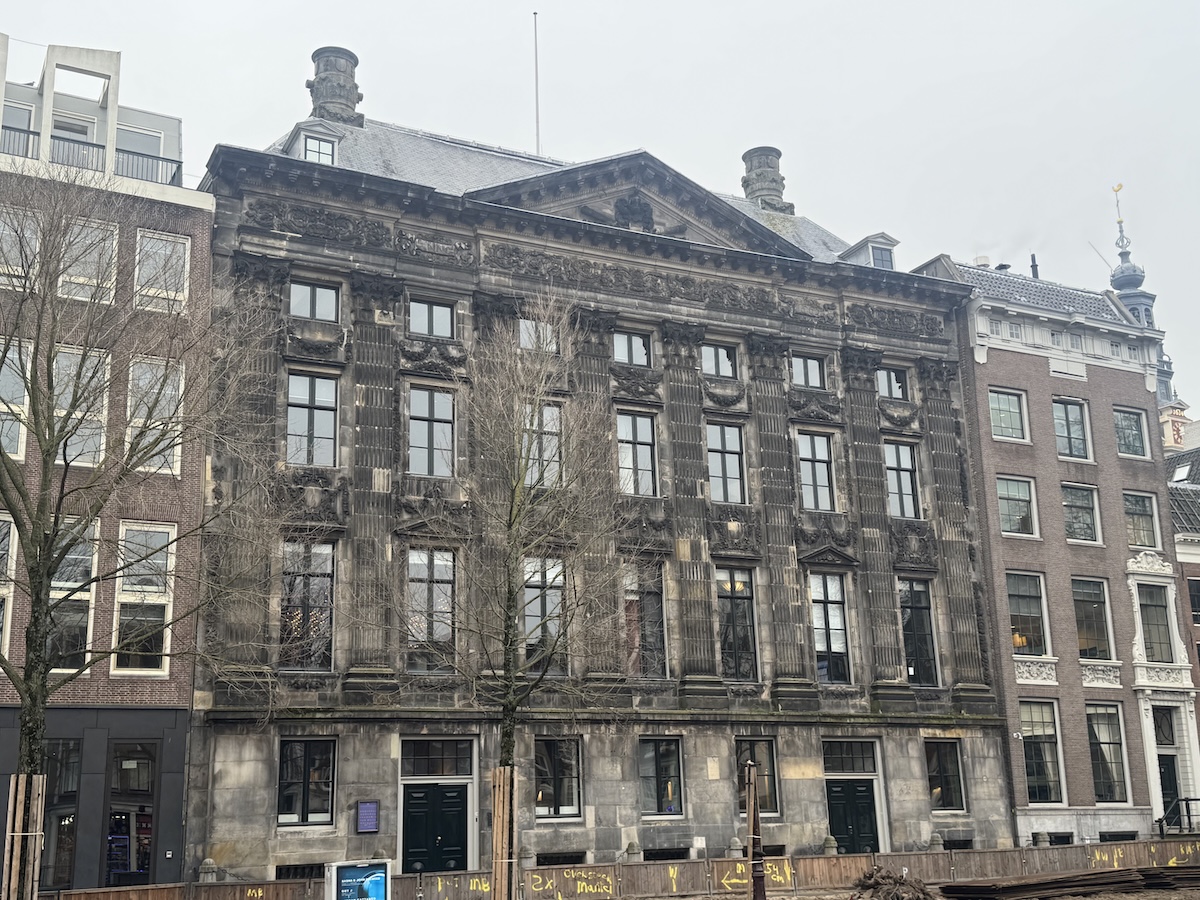
Of course, there are often rational explanations. Old wooden houses creak, canals echo sounds in unusual ways, and centuries-old buildings can create strange acoustics that easily play tricks on the mind.
Still, Amsterdam’s historic streets and ancient canal houses provide the perfect setting for ghost stories. Whether you believe in spirits or simply enjoy the mystery, these legends remain a fascinating part of the city’s folklore. 👻
Haunted Places in Amsterdam Map
Amsterdam’s ghost stories are connected to many different locations across the city. Some of these places are well known historic landmarks, while others are quiet corners that visitors often overlook.
The map below highlights several places associated with mysterious events, legends, and centuries-old stories. Seeing them on a map makes it easier to understand how these locations are spread throughout Amsterdam.
Secret Haunted Places in Amsterdam
Some of these places can be visited during walks through the historic center, while others require exploring different neighborhoods of the city.
Beyond the well-known historic streets of the city center, Amsterdam has many lesser-known places connected to mysterious stories and strange events. Some of these locations are quiet corners that visitors rarely notice, while others are historic buildings whose darker legends are often overlooked.
Below are a few places associated with Amsterdam’s ghost stories and local folklore:
Tolhuis Amsterdam Noord – The Horror Hotel
History of the Place
In 1662, Amsterdam Noord was nothing more than a desolate plain across the IJ River. The only signs of life were the landing point of the Buiksloter ferry… and the city’s gallows.
Since the 15th century, the bodies of executed criminals were brought here from Dam Square and left exposed “so that birds would eat them and the air would consume them.” Corpses hung from wooden gallows or were tied to wheels, slowly decomposing in the open fields of what was known as Volewijck — the “bird district.”
Right next to this macabre landscape, an inn was built: the Tolhuis.
Originally home to a toll collector, the building quickly became an inn. Amsterdam closed its gates at night, leaving travelers stranded outside the city. The Tolhuis offered food, drink, and a place to sleep — even if it meant spending the night beside the dead.
Over time, the area became a popular outing. Families visited the gallows field as a day trip, and by 1770 even a tea pavilion was added.
After 1795, public display of bodies ended and the gallows disappeared. In the 19th century, the Tolhuis transformed into a lively venue with gardens, concerts, and panoramic views over Amsterdam.
Today, the area is known as Tolhuistuin — a cultural hotspot in Amsterdam Noord.
Why It Has a Mysterious Reputation
The Tolhuis was once a place where life and death existed side by side.
Guests would eat, drink, and sleep while just outside, bodies of executed criminals slowly decomposed in the open air. The silence of the empty fields, broken only by wind and distant sounds from the city, must have created an unsettling atmosphere.
One of the most haunting figures connected to this place is Elsje Christiaens, an 18-year-old girl executed for murder, whose body was displayed here together with the axe she used.
Even today, some visitors mention an odd feeling when walking through the area — a sudden chill in warm weather, or the sense that the place is not entirely empty.
Others describe hearing faint sounds carried by the wind, difficult to explain, especially in quieter moments.
Nothing dramatic. Just… enough to make you pause.
What Visitors Can See Today
Today, Tolhuistuin is a lively and modern place.
You’ll find cafés, gardens, cultural events, and locals enjoying the open space. It’s a popular spot to relax, especially in summer.
The gallows field itself has completely disappeared, but its location is still roughly known — just a short distance from the current site.
Where bodies once hung, you now see people walking their dogs, children playing football, and friends gathering in the sun.
There is nothing here that openly reveals its past.
But once you know the story… it’s hard not to feel it.
Huis te Vraag – The Cemetery of Forgotten Stories
History of the Place
Huis te Vraag is not just a building, but a place with a history that goes back centuries — long before Amsterdam expanded into this area.
Already before 1400, a route connected Haarlem to Amsterdam through a landscape of water, marshes, and scattered farms. Travelers could easily lose their way here. At this exact spot, near the river Schinkel, a small inn and ferry point emerged.
To attract visitors, the innkeeper placed a sign along the road reading “te vraghe” — meaning “here you can ask” for directions or information.
According to tradition, in 1486 even Maximilian of Austria stopped here to ask for the way while traveling from Haarlem to Amsterdam. From that moment, the name “Huis te Vraag” became established.
In 1618, a wealthy cloth manufacturer built a large country house here, inspired by the story. Around it, a small settlement developed with farms, a mill, and activity along the busy waterway.
But this world disappeared.
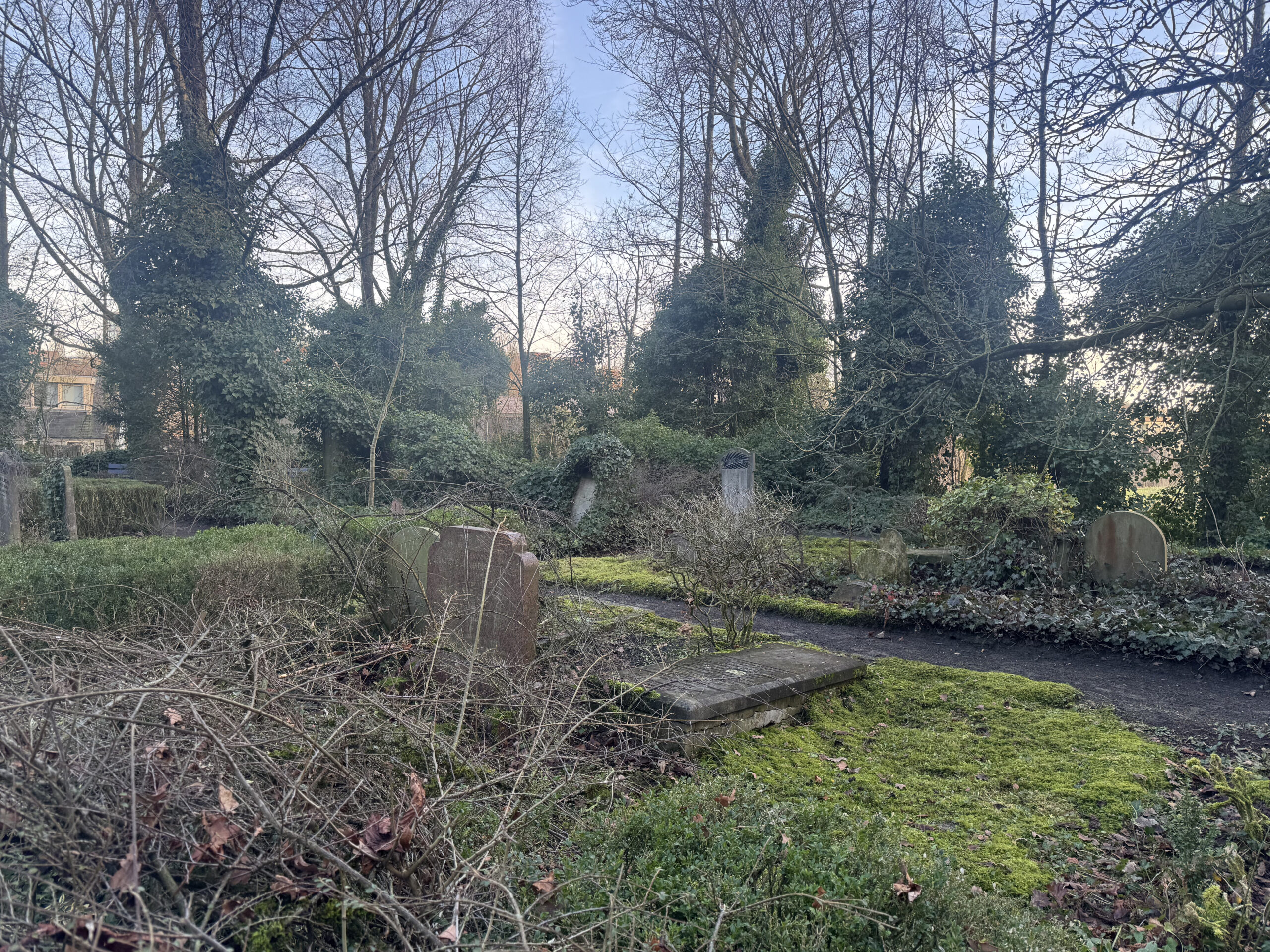
The house was demolished in 1890, and shortly after, the land was transformed into something very different: a private Protestant cemetery.
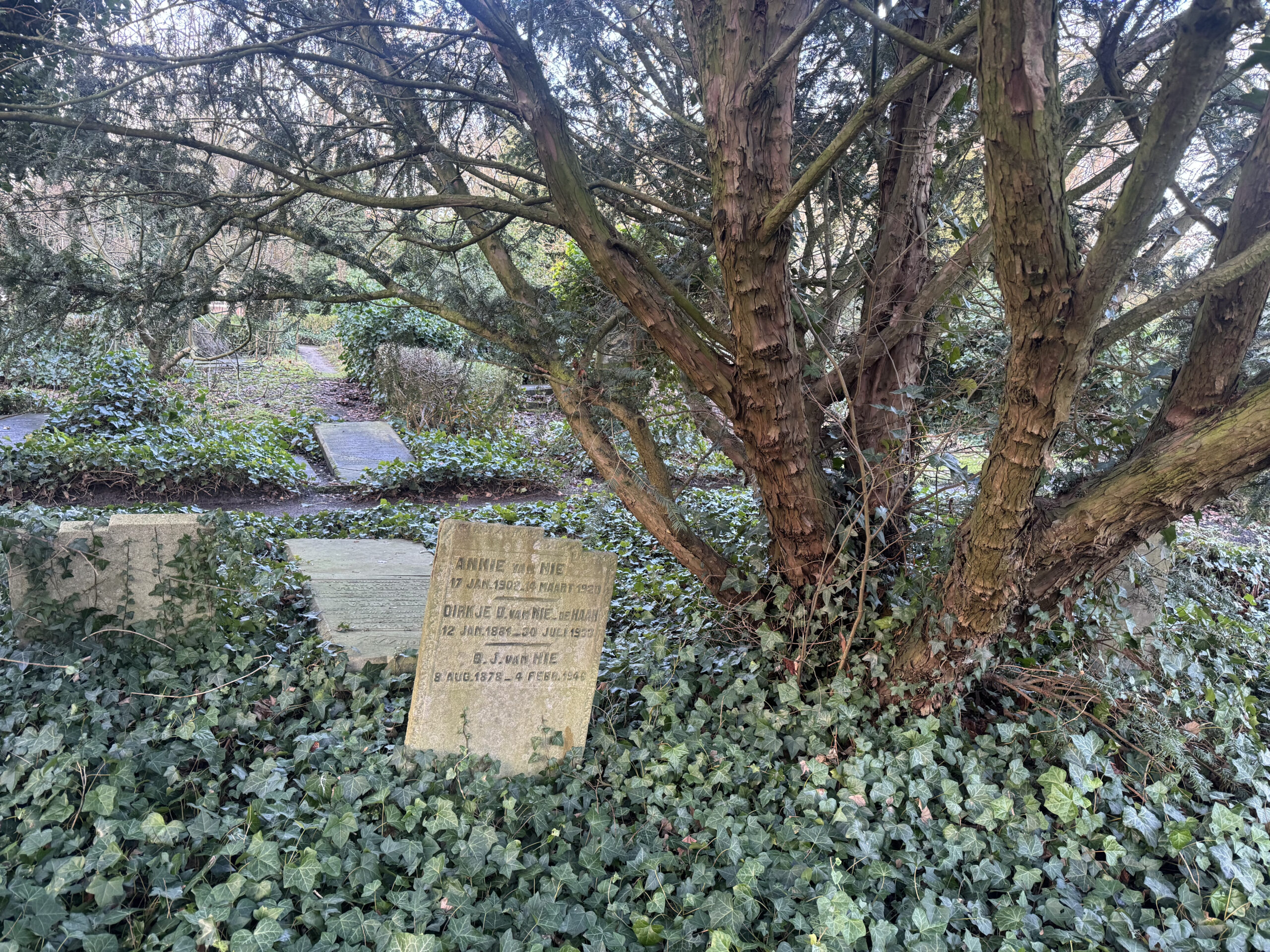
Opened in 1891, Huis te Vraag became one of the first private burial grounds in Amsterdam. Over the decades, thousands of people were buried here — family graves stacked multiple layers deep.
By 1962, the cemetery held over 16,000 registered burials… and likely many more.
During World War II, unregistered burials took place here: Jewish victims, people in hiding, and victims of the Hunger Winter who were found anonymously in the streets.
The cemetery closed in the 1960s, but unlike many others, it was never cleared.
Why It Has a Mysterious Reputation
Huis te Vraag is not known for dramatic ghost stories.
Its atmosphere comes from something more subtle — and perhaps more unsettling.
This is a place where thousands of lives ended… and where many names were never recorded.
Beneath this relatively small piece of land lie layers of burials, generations deep. Some graves belong to families. Others to people who were never identified.
Some paranormal enthusiasts and ghost hunters have visited the site over the years and claim to have felt unusual presences — a sense of being watched, or sudden shifts in atmosphere while walking through the cemetery.
Nothing that can be proven. Nothing that is widely documented.
What Visitors Can See Today
Today, Huis te Vraag is a hidden cemetery in Amsterdam, located near the modern Zuidas district.
It is peaceful, green, and almost unnoticed by most people passing nearby.
Old graves, monuments, and overgrown paths give the place a timeless feeling. Unlike larger cemeteries, it feels intimate — almost forgotten.
There are no signs explaining its full history, and many visitors have no idea how many people are buried here.
At the same time, locals often use the area as a quiet park — a place to walk, sit, or simply escape the busy surroundings. It’s one of the few calm, green spaces in this part of the city.
You won’t find crowds or guided tours.
Just silence, trees, and the sense that this place has quietly outlived everything around it.
And that, somehow, it was never meant to disappear.
The House with the Blood Stains – Amstel 216
History of the Place
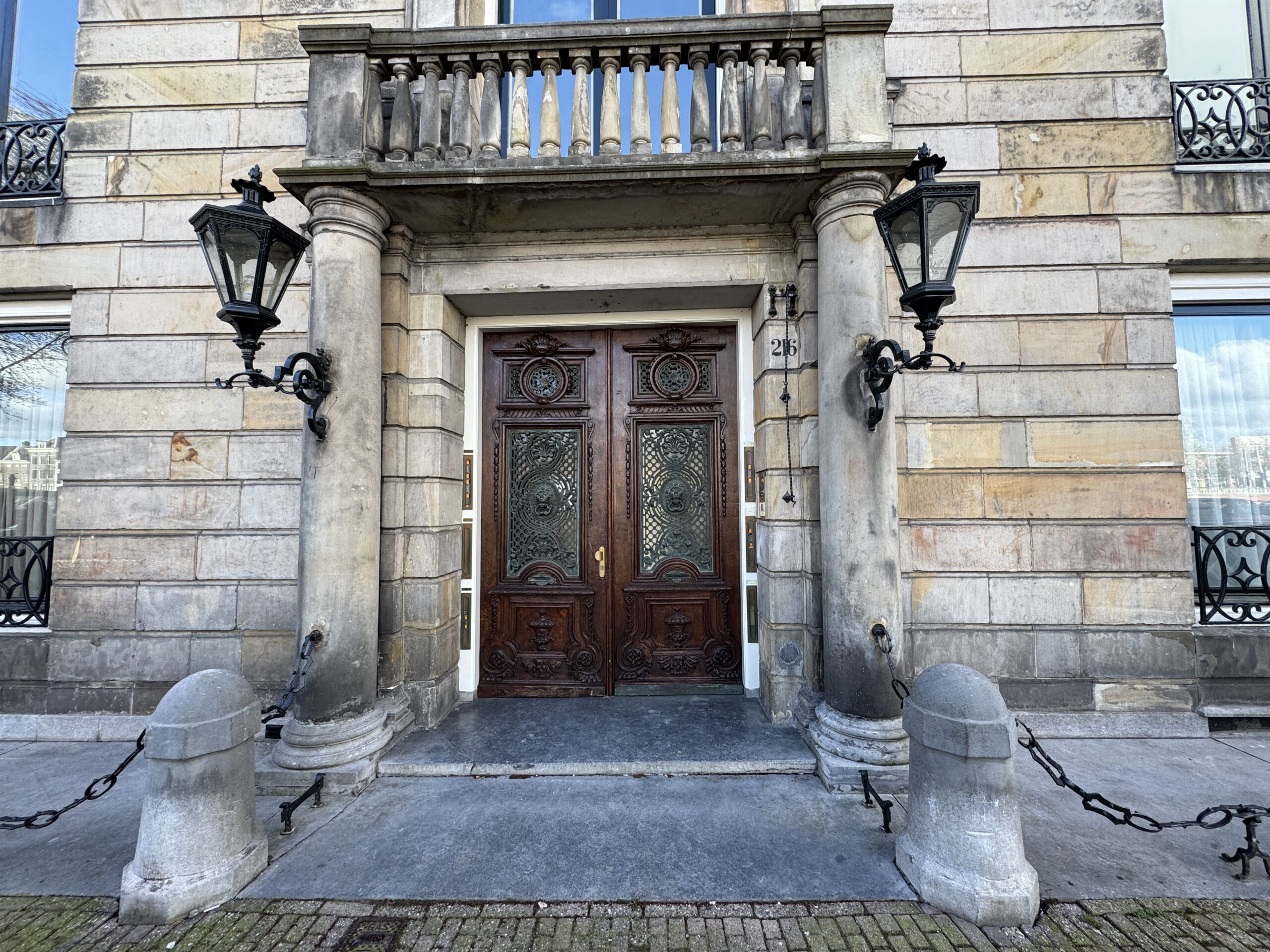
Overlooking the Amstel River stands a tall, narrow canal house with a plain gray facade — easy to miss at first glance.
The building was constructed in the early 1670s for a wealthy soap manufacturer, Gijsbert Dumber. But his name has largely been forgotten.
What made this house famous came later.
In the late 17th century, the house became the residence of Coenraad van Beuningen — a powerful figure in Amsterdam. He served as mayor no fewer than six times and was also a respected diplomat.
By all accounts, he was successful, wealthy, and influential.
But toward the end of his life, something changed.
Van Beuningen’s mental state began to deteriorate. The exact cause is unknown, although some historians suggest he may have suffered from a serious mental illness.
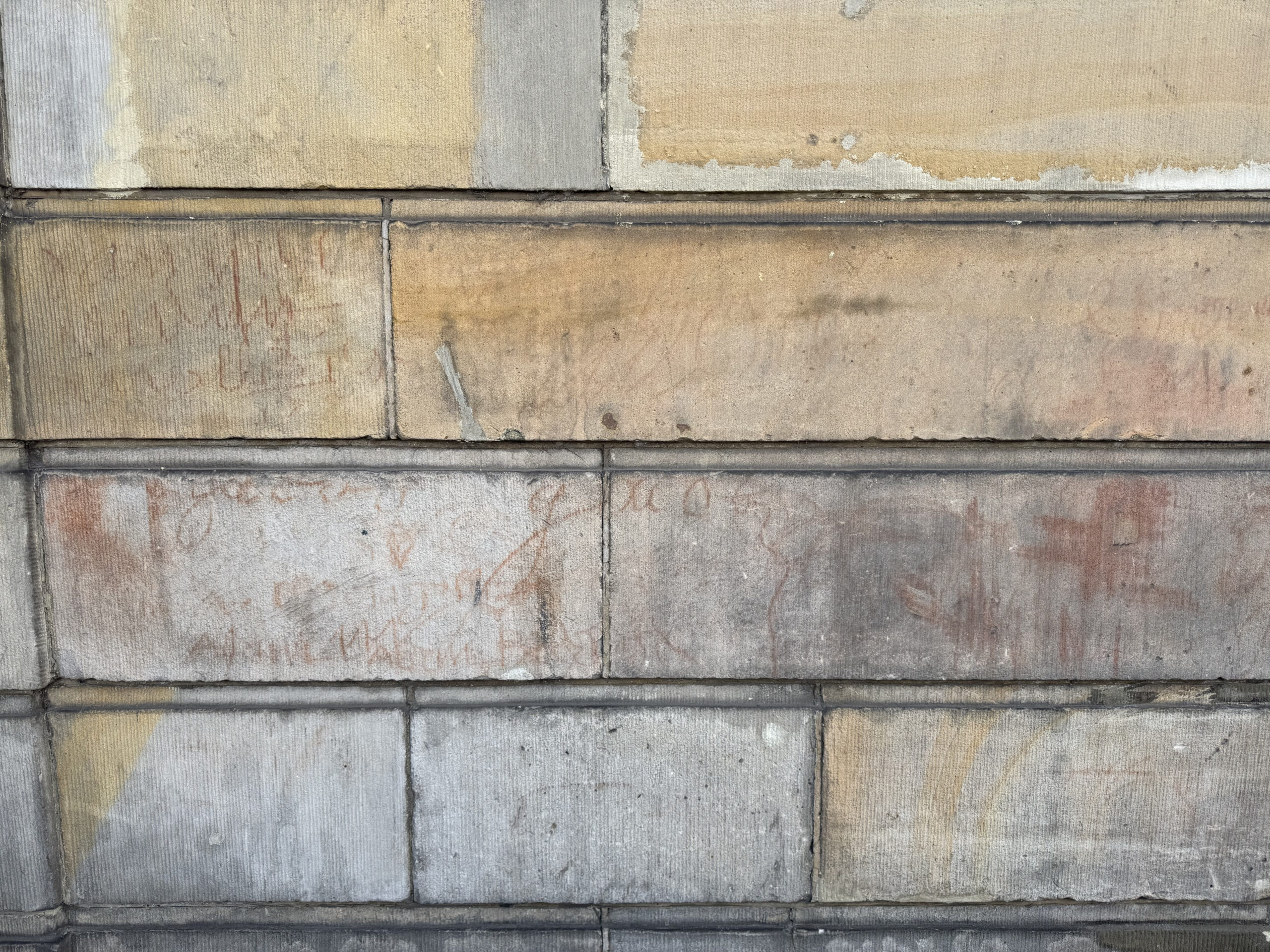
During this period, he started covering the facade of his own house with strange symbols — believed to be inspired by mystical or Kabbalistic ideas.
And according to local stories… he may have painted them using his own blood.
Why It Has a Mysterious Reputation
The house’s reputation comes from these markings — still faintly visible on the facade today.
They appear as reddish-brown symbols, irregular and unsettling, standing out against the otherwise ordinary exterior.
Whether they were truly painted in blood is impossible to prove.
But the story has endured for centuries.
What makes it particularly eerie is not just the rumor — but the man behind it.
A powerful, respected mayor… reduced to obsessively marking his own home with cryptic symbols.
Some say the symbols were meant as protection. Others believe they were the result of paranoia or visions.
Visitors who know the story often stop and stare a little longer than usual.
Trying to make sense of the shapes.
Or wondering what was going through his mind as he painted them.
What Visitors Can See Today
Today, the house at Amstel 216 remains a private residence.
At first glance, it looks like any other canal house along the river.
But if you look closely at the facade, you can still spot faint reddish-brown markings — the so-called “blood stains.”
They are subtle, easy to miss, and weathered by time.
There are no signs, no explanations, and no indication of the story unless you already know it.
People walk past it every day without noticing anything unusual.
But once you see the marks… and know where they might come from…
It’s hard not to stop and look twice.
Amsterdam Canals – The Legend of Bullebak
History of the Place
Long before Amsterdam became the picturesque canal city we see today, its waterways were darker, less controlled, and far more dangerous.
In the 17th century, the canals were not only used for transport and trade, but also as places where crime, poverty, and desperation played out.
Out of this environment emerged one of Amsterdam’s most chilling figures: Bullebak.
According to local folklore, Bullebak was a bogeyman-like character said to live in or near the canals, especially around the Jordaan area. Parents warned their children that if they wandered too close to the water… Bullebak would come for them.
The name itself became a tool of fear.
“Pas op voor de Bullebak” — Watch out for the Bullebak.
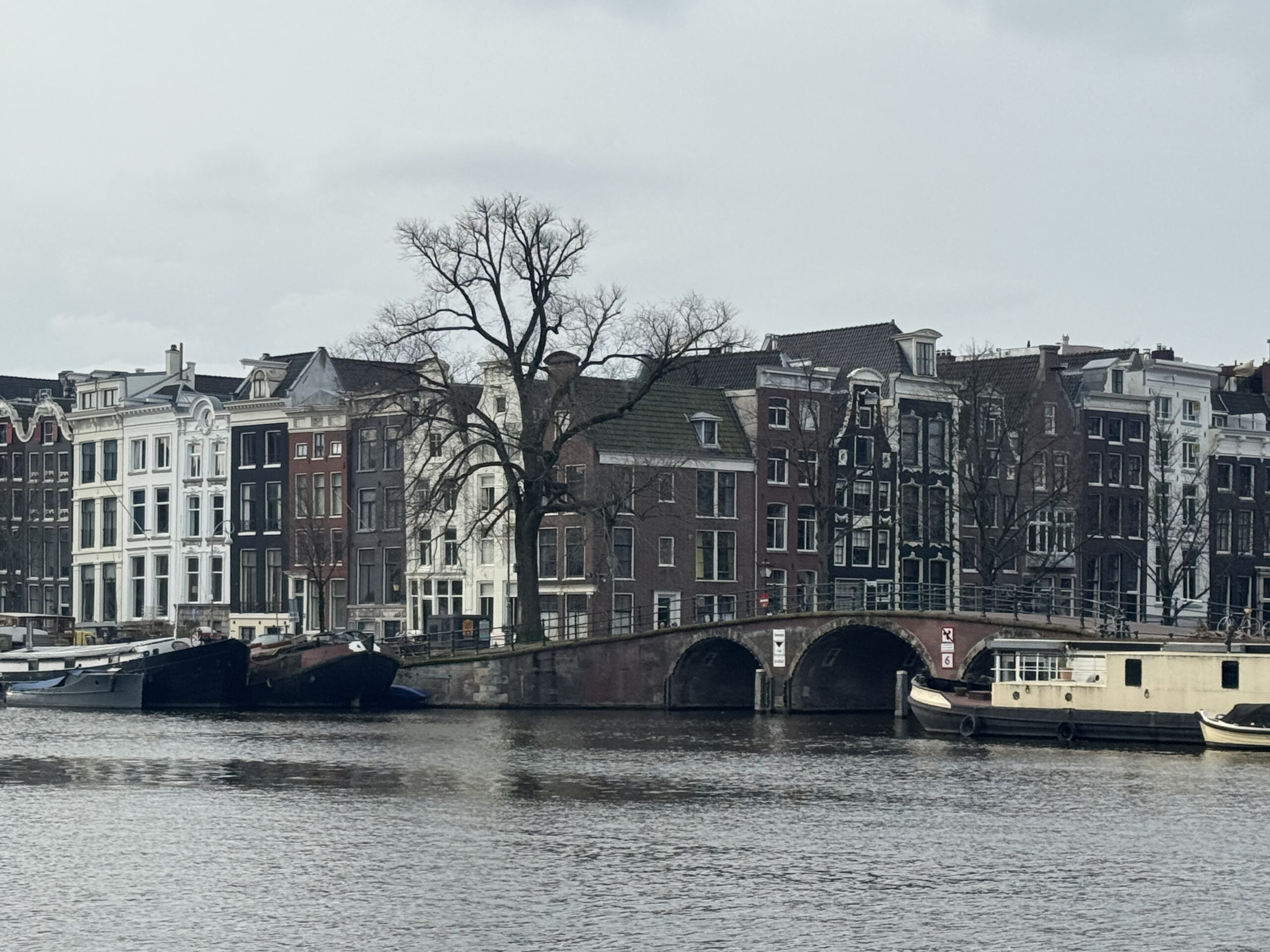
Whether based on a real person or not remains unclear. Some believe the legend may have been inspired by criminals or kidnappers who operated near the canals. Others think it was purely a story used to keep children safe from the water.
But the canals, with their dark waters and narrow edges, made the story feel very real.
Why It Has a Mysterious Reputation
The legend of Bullebak is deeply tied to fear of the unknown.
Unlike haunted houses or specific locations, Bullebak doesn’t belong to one place — he belongs to the canals themselves.
The still, dark water… the reflections at night… the silence of certain streets after sunset — all of it feeds into the idea that something could be hiding just out of sight.
For centuries, children grew up with this warning.
Don’t go too close to the canals.
Don’t wander alone.
Or Bullebak might take you.
Even today, the story lingers in Amsterdam’s cultural memory.
Not as a ghost you can see…
But as something you imagine.
What Visitors Can See Today
Today, Amsterdam’s canals are one of the most beautiful parts of the city — calm, scenic, and full of life.
Boats pass by, people sit along the edges, and the atmosphere is relaxed, especially during the day.
But at night, the feeling changes.
Some quieter canals, especially away from the main tourist areas, can feel surprisingly still. The water turns dark, reflections blur, and the city noise fades into the background.
There is, of course, nothing there.
But if you know the story… You might find yourself stepping just a little further away from the edge.
Amsterdam Streets – The Spirit of Black Matthew
History of the Place
The most haunted “place” in Amsterdam is not a building or a canal.
It’s a spirit.
According to old legends, Black Matthew has been wandering the streets of Amsterdam since the 1200s — long before the canals, long before the city became what it is today.
The story begins with a man named Matthew.
He was said to be a vagabond — a drifter moving through the early streets of Amsterdam. But he wasn’t just a thief. He was also known as a gambler, a trickster… and possibly a magician.
Matthew cheated his way through life. He gambled, deceived people, and was rumored to use dark magic to win his games.
Until one day, he pushed it too far.
The legend says he made the ultimate mistake — he played a game with the devil… and lost.
From that moment on, he was condemned to wander the city forever.
Why It Has a Mysterious Reputation
Black Matthew is not tied to one location.
He moves.
That’s what makes the story so unsettling.
Unlike other haunted places where you go looking for a ghost, here the idea is the opposite — the ghost might find you.
It is said that his spirit still roams the old center of Amsterdam, especially in quieter streets and darker corners.
Some stories describe him as a shady figure who suddenly appears, bumps into you, or seems to follow you for a few moments before disappearing again.
Others say he tests people — just like he did in life — through small moments of chance, coincidence, or unease.
Of course, there is no proof.
But it’s the kind of story that stays in your mind when you’re walking alone at night.
What Visitors Can See Today
Today, there is no specific place to visit for Black Matthew.
He belongs to the streets themselves.
You can walk through the historic center of Amsterdam — through narrow alleys, along quiet canals, or across empty squares at night — and never see anything unusual.
But sometimes, the city becomes very still.
You hear footsteps.
Someone passes a little too close.
You turn around… and no one is there.
It’s probably nothing.
But in Amsterdam, there’s always that small thought in the back of your mind…
What if it isn’t?
Muiderslot Castle – The Knight Who Never Left
History of the Place
Just outside Amsterdam, where the river Vecht meets the IJmeer, stands Muiderslot — one of the best-preserved medieval castles in the Netherlands.
At first glance, it looks almost like something out of a fairytale.
But its history is far from that.
The castle was built in the late 13th century by Count Floris V, a powerful nobleman who controlled trade routes and collected tolls from passing ships. Muiderslot was both a fortress and a symbol of his power.
That power, however, did not last.
In 1296, Floris V was betrayed by his own nobles. He was captured and imprisoned — in his own castle. Shortly after, he was taken outside and killed while trying to escape.
Centuries later, the castle became a residence again. One of its most famous inhabitants was the 17th-century writer P.C. Hooft, who lived here and turned it into a cultural center.
But even he reportedly could not ignore what had happened here before him.
Why It Has a Mysterious Reputation
Muiderslot is often called a “Little House of Horrors” — and once you know the stories, it’s easy to understand why.
The most famous legend is that of Count Floris V himself.
It is said that his spirit still wanders the castle, unable to leave the place where he was betrayed. According to stories, even P.C. Hooft claimed to have seen him — moving nervously from room to room, pale and restless.
But Floris is not the only presence connected to the castle.
Another story speaks of Machteld van Velsen. According to legend, she was assaulted by the count, and her tragic story became one of the motives behind his murder. It is said that her presence is still felt in certain rooms of the castle.
Visitors and staff sometimes mention small, unexplained things.
Footsteps in empty corridors.
Doors that seem to open on their own.
A sudden chill in otherwise calm rooms.
Nothing you can prove.
But enough to make you wonder.
What Visitors Can See Today
Today, Muiderslot is a popular museum and one of the best day trips from Amsterdam.
You can explore the towers, walk through the courtyard, and step inside rooms that have been carefully restored to reflect medieval life.
During the day, it feels like history — fascinating, educational, and surprisingly accessible.
But the atmosphere changes when it gets quieter.
In October, during special evening events around Halloween, the castle leans into its darker side. Visitors are guided through the quietest corners and narrow staircases, where the stories feel just a little more real.
And even outside of those events…
If you find yourself alone in one of the towers, or walking through a silent corridor…
You might start to feel that this place is not just preserving history.
It’s holding onto it.
Why Most Ghost Tours Focus on Amsterdam’s Historic Center
If you look at most ghost tours in Amsterdam, you’ll notice they all follow a similar route — the historic city center.
And there’s a good reason for that.
The oldest and most well-known stories are concentrated here. This is where medieval Amsterdam began, and where centuries of history — and legends — overlap in a relatively small area.
Places like the old harbor, narrow alleyways, and the earliest streets of the city naturally became the setting for many of these stories.
Another practical reason is distance.
Most of these locations are very close to each other, which makes it possible to experience multiple haunted spots without having to travel far. This is especially important for walking tours.
Because of this, most ghost walks concentrate on the historic center where many legends can be experienced within a short distance.
It also fits perfectly with how tours are designed.
Most ghost tours last around two hours — just enough time to walk through the old center, hear the stories, and experience the atmosphere without feeling rushed.
That’s why, even though haunted places exist beyond the center, the heart of Amsterdam remains the main stage for its ghost stories.
If you’re curious about the exact route and stories typically included in these walks, I explain it in detail in my Haunted Amsterdam Ghost Walk guide.
Why Most Ghost Tours Focus on Amsterdam’s Historic Center
💡 Tip: Most ghost tours in Amsterdam focus on the historic city center. The places in this guide are different — lesser-known locations spread across the city. If you’d like to explore the classic ghost stories in the old center, you can follow my self-guided Haunted Amsterdam experience.
Can You Visit Haunted Places in Amsterdam on Your Own?
The short answer is yes — you absolutely can.
Exploring haunted places in Amsterdam on your own can actually be a great experience.
Pros
• You have complete flexibility
• It’s free
• You can explore at your own pace
You can walk through the canals at night, discover hidden streets, and let your curiosity guide you.
But there’s a catch.
Cons
• The stories are often difficult to find
• Locations are spread across the city
• It’s easy to miss the historical context
Many of these places don’t have signs, explanations, or anything that tells you what really happened there.
You might walk right past one of the most haunted spots in Amsterdam… and never even realize it.
That’s exactly why I created my self-guided ghost tour.
After years of guiding tours in Amsterdam, I’ve brought together the stories, locations, and atmosphere into one experience that you can follow at your own pace.
No groups. No fixed schedule. Just you, the city… and the stories behind it.
👉 You can check out the self-guided Haunted Amsterdam tour here.