Whale Sharks Thailand: Epic Encounters at Sail Rock & Beyond
Encountering a whale shark is one of those epic moments many divers dream of, and when it happens, it’s so brief and magical that it feels almost unreal. These gentle giants love Thailand’s warm, plankton-rich waters, and their majestic presence makes time feel just a bit slower. Thailand has become one of the top places to meet them, in iconic sites such as Sail Rock, Richelieu Rock, and the Similan Islands.
The first time I was blessed to see a whale shark was during my 6th dive on my Advanced Open Water course, and years later I was also lucky to meet them again. In this guide, you’ll find where whale sharks roam in Thailand, the best times to see them, and how to enjoy every encounter with respect and care.

2. Where to See Whale Sharks in Thailand
2.1 Gulf of Thailand
Between 1991–2023, a total of 1,409 observations of Whale Sharks were recorded from Chumpon Pinnacle, Koh Tao, and Sail Rock within the area, representing 48% of all Whale Shark sightings throughout Thailand during this period
• Sail Rock
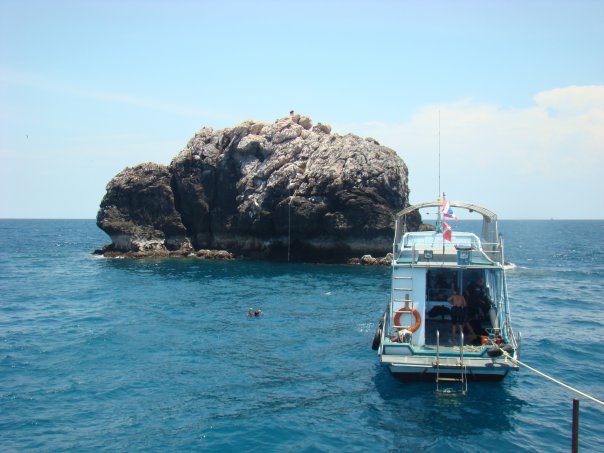
Sail Rock is a lonely pinnacle between Koh Tao and Koh Phangan, known for its great visibility, swirling schools of fish, and purple-colored soft corals, is one of the places in Thailand with a higher chance to spot coral.
• Chumphon Pinnacle
Many divers rank this as one of Koh Tao’s best sites. This offshore pinnacle features impressive granite formations, plenty of pelagic life, and the occasional whale shark when the conditions are right
• Southwest Pinnacle
A series of submerged pinnacles southwest of Koh Tao, where big schools of fish gather and whale sharks sometimes cruise through the open water.
• Koh Tao Region
The island’s surrounding dive sites collectively offer some of the most consistent whale-shark sightings in the Gulf, thanks to warm waters, rich plankton, and year-round diving activity.
2 Andaman Sea (West Coast, Thailand)
Although comprehensive long-term datasets for whale-shark observations in the Andaman Sea are limited, the region is widely recognized in marine-biology literature and conservation reports as one of Thailand’s key areas for Rhincodon typus encounters. Sightings are reported annually across several offshore sites, particularly during the late northeast monsoon, when elevated plankton availability supports higher regional productivity. For example in 21
2022, 19 whale sharks were found in the Andaman Sea.

• Richelieu Rock
Often cited as a pelagic biodiversity hotspot, Richelieu Rock is associated with recurrent whale-shark sightings due to its strong currents and plankton-rich conditions.
• Koh Tachai and Koh Bon (Similan Islands National Park)
Part of a major pelagic corridor in the northern Andaman Sea, these sites have periodic whale-shark reports, particularly during months of elevated plankton concentration.
• Hin Daeng and Hin Muang (Koh Lanta Region)
Two deep offshore pinnacles known for strong currents, rich pelagic life, and periodic whale-shark sightings. These sites are major highlights of diving in Koh Lanta.
• Koh Phi Phi
Whale sharks are occasionally reported at offshore sites around the islands (Bida Nok, Bida Nai, Hin Bida). These locations are well known to divers and are frequently highlighted in guides to diving in Koh Phi Phi.
Whale Shark Season in Thailand
Best Months Overall
Whale shark encounters in Thailand are most frequent from February to May, when calm seas and increased plankton availability create favorable conditions. A smaller secondary peak often occurs from October to November, depending on yearly oceanographic patterns.
Whale Shark Season by Region
Gulf of Thailand:
Sightings tend to cluster around March–May, especially at offshore pinnacles such as Sail Rock, Chumphon Pinnacle, and Southwest Pinnacle. Calm conditions and seasonal productivity make these months the most reliable.
Andaman Sea:
The best chances typically fall between February–April, with occasional sightings during October–November as changing currents bring nutrient-rich water into offshore sites like Richelieu Rock, Koh Bon, and Hin Daeng/Hin Muang.
Why Sightings Change Each Year
Plankton blooms:
Seasonal increases in plankton can attract whale sharks, but bloom strength varies year to year.
Water temperatures
Shifts in sea temperature influence prey availability and may alter whale-shark movements.
Migration unpredictability
Whale sharks are wide-ranging, migratory animals, so natural variability plays a major role—even during “peak season,” sightings are never guaranteed.
Snorkeling Spots vs. Diving Spots for Whale Sharks
Where Snorkelers Have a Chance
Snorkelers can sometimes swim with whale sharks in Thailand when the animals rise toward the surface to feed—usually during periods of high plankton. Popular snorkeling-friendly areas include:
- Koh Tao (rare but possible during peak season)
- Richelieu Rock liveaboard trips that allow snorkelers when conditions are calm
- Occasional surface sightings in the Andaman Sea during plankton-rich months
These encounters are less predictable but unforgettable when they happen.
Why Diving Improves Your Odds
Scuba diving dramatically increases your chances of swimming with whale sharks in Thailand because:
- Whale sharks frequently stay around deep pinnacles such as Sail Rock, Chumphon Pinnacle, Koh Bon, and Hin Daeng/Hin Muang.
- Divers can spend more time in the depth range where whale sharks naturally cruise.
- Offshore dive sites attract more marine life and plankton, drawing in the sharks.
For the best chance to swim with whale sharks in Thailand, diving—especially at offshore pinnacles during peak season—offers the highest success rate.
My Experience Seeing a Whale Shark in Thailand
I saw my very first whale shark in Thailand during my Advanced Open Water course—on my sixth dive ever. Doing some yoga in Koh Phangan had been on my radar before before I booked that first trip to Thailand during which I completed my first two PADI diving levels.
“If we see a whale shark, we will stop everything and go spotting the shark,” my lovely scuba diving instructor told me and my dive buddy during my PADI Advanced Open Water course. At that point I didn’t know much about diving—or whale sharks at all—as this was only my sixth dive. The word shark still made me a bit nervous.
We were doing our Deep Dive at around 30 meters, and had just finished the famous egg experiment. Our instructor had cracked the egg underwater, and all of us hovered around it, watching how the pressure kept it together in a perfect, floating sphere. Right after the experiment, our instructor suddenly signaled for us to look out into the blue.
And there it was. A whale shark.
One moment we were observing a science trick at depth, and the next we were watching one of the most peaceful giants in the ocean glide past us. We followed it for a while, always keeping a respectful distance and making sure we approached the shark in an ethical, calm way. For a new diver, it was a mix of excitement, disbelief, and pure magic.
Later, on my way back to Europe, someone in Bangkok told me, “I have almost 6000 dives and I have not yet seen a whale shark.”
“Well, you should go and dive Sail Rock,” I answered. And honestly, I still think it’s good advice.
Since that first unexpected encounter, I’ve returned to Koh Phangan several times and dived Sail Rock again and again. And I’ve been lucky—my whale shark friends have shown up more than once.
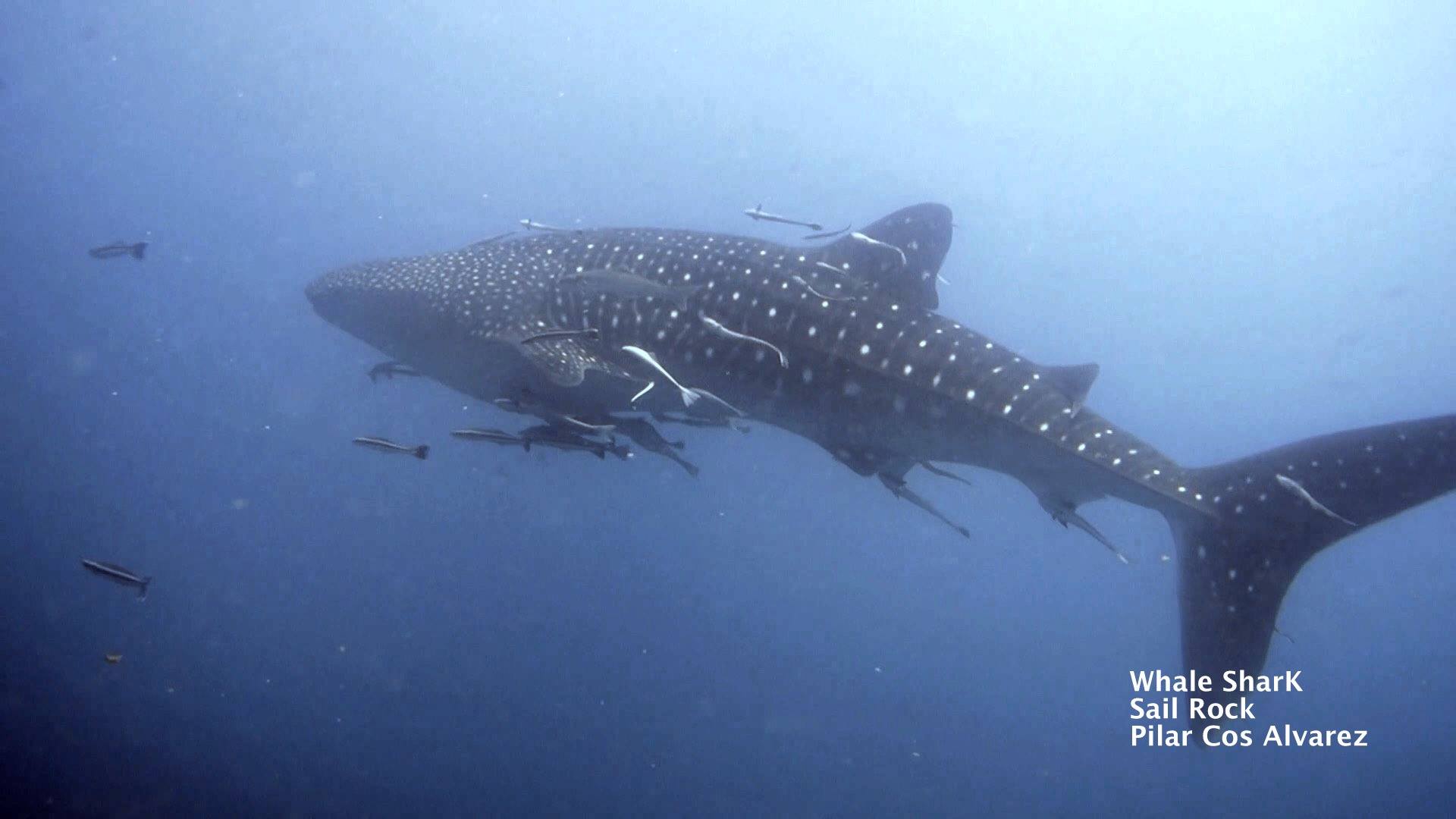
Years later, after many more visits and a handful of encounters, one sighting still stands out above all the others: the moment I captured a whale shark on video for the first time. We were about 15 minutes into the dive at around 15 meters of depth, peacefully gliding along the reef and watching the marine life when suddenly, above us and coming from behind, our friend the whale shark appeared. I was in awe. It was swimming straight toward us, and this time I actually had my camera with me. It was such a special moment I will never forget. The encounter felt almost spiritual, as if the ocean and the whale shark were revealing a big secret right in front of our eyes.
“My whale shark encounter at Sail Rock, Thailand — video.”
That video is still one of my favorite dive memories. Seeing the whale shark fill my camera frame—those beautiful spots, its slow sweeping tail, the calm way it moved through the water—felt unreal. And what made it even more special were the little parasite fish and remoras swimming along with it, sticking to its side like tiny travel buddies that never leave. Watching them glide together, almost like their own little team, made the whole moment feel even more magical. It wasn’t just a sighting; it honestly felt like a spiritual connection with this gentle giant and the small world that travels with it.
Why This Doesn’t Mean Sail Rock Is the Only Place
Although my most memorable encounter happened at Sail Rock, whale sharks appear throughout both the Gulf of Thailand and the Andaman Sea. No single site—Sail Rock included—can assure a sighting.
My experience is just some lucky moments where conditions, timing, and chance all aligned. Whale sharks are unpredictable and highly migratory, and that mystery is part of what makes every encounter so extraordinary.
How to Increase Your Chances of Seeing a Whale Shark
While whale shark sightings are never guaranteed, a few smart choices can dramatically improve your odds.
- Choose deep pinnacles
These underwater mountains often create strong upwellings that attract plankton—whale sharks’ favorite snack. Sites with dramatic depth changes tend to see more activity. - Pick the right season
Whale shark migrations are highly seasonal, so check the peak months for your destination. Local dive shops usually know when sightings are most common. - Dive early in the morning or during slack tides
Calm, predictable water movement increases plankton density and visibility, making these gentle giants more likely to appear. - Go with experienced dive shops
Guides who have tracked whale shark patterns for years know which sites are “hot” and which are less reliable. A good operator makes a big difference. - Stay longer (3–5 days of diving)
Whale shark encounters are rare and often unpredictable. The more dives you do, the higher the odds you’ll be in the right place at the right time.
Safety & Ethical Guidelines

Whale Shark Safety & Ethical Guidelines
Keep a safe distance (3–4 meters; more from the tail).
Do not touch or ride the whale shark.
Do not block their path — always stay to the side.
Avoid flash photography to prevent stress.
Follow instructions from certified guides.
Respect local regulations to help protect this endangered species
Conservation Status of Whale Sharks in Thailand
Whale shark conservation in Thailand is an ongoing effort supported by researchers, local communities, and responsible dive operators. Thailand plays a key role in regional whale shark studies, with long-term photo identification projects helping scientists understand migration routes, individual life histories, and population patterns in the Gulf of Thailand and the Andaman Sea. Many dive shops also collaborate by submitting sightings and photographs, which contribute directly to global databases.
Tourists can support these initiatives by choosing operators who participate in research programs, avoiding practices that disturb marine life, and reporting any whale shark encounters to platforms like Sharkbook or local marine research groups. These small actions help scientists track individual sharks and provide valuable data for long-term protection.
Best Dive Shops and Liveboards for Whale Sharks Encounters
Below are reputable dive operators I have personally dived with and can confidently recommend. These centers are known for professional standards, good safety practices, and responsible diving.
- Crystal Dive (Koh Tao)
- Haad Yao Divers (Koh Phangan)
- Blue View Divers (Koh Phi Phi)
- Lanta Diver (Koh Lanta)
For liveaboard trips to the Similan Islands, there is a wide selection of established operators departing from Khao Lak, though I have not personally used a specific one.
FAQs
Can beginners see whale sharks in Thailand?
Yes. Many whale-shark sightings in Thailand happen at beginner-friendly sites such as Sail Rock (Koh Phangan), Chumphon Pinnacle (Koh Tao), and Bida Nok (Koh Phi Phi). Even Open Water students sometimes get lucky. As long as new divers follow their instructor’s briefing and maintain calm buoyancy, beginners can absolutely enjoy an encounter in Thailand.
Are whale sharks in Thailand dangerous?
No. Whale sharks in general are gentle filter feeders and are completely harmless to divers and snorkelers. The only concern is for their safety — divers should avoid touching, blocking their path, or chasing them. Thailand’s marine-park rules and most dive operators emphasize respectful distancing to protect the animals.
How likely is a whale-shark sighting in Thailand?
Sightings are possible but not predictable. Thailand sees semi-regular encounters at well-known sites like Richelieu Rock (Khao Lak/Similans), Sail Rock (Koh Phangan), Chumphon Pinnacle (Koh Tao), and Hin Daeng/Hin Muang (Koh Lanta). Some seasons bring clusters of sightings, while other months may have none. Most divers consider a whale-shark encounter a lucky bonus rather than a guarantee.
Can you snorkel with whale sharks in Thailand without diving?
Yes. In Thailand, whale sharks often swim in mid-water or near the surface, which means snorkelers sometimes see them — especially at shallow sites like Sail Rock or around the Similan Islands. Some liveboards and day-boats allow snorkelers to join, but it’s important to follow the same guidelines as divers: keep distance, avoid touching, and never block their path.