
Pak Ou Caves: My Visit to the Cave of 4,000 Buddhas on the Mekong River
Pak Ou Caves were one of the biggest surprises of my second visit to Laos. Before arriving in Luang Prabang, I had never even heard of this sacred site overlooking the Mekong River and home to more than 4,000 Buddha statues.
Little did I know that this half-day trip would become one of the highlights of my time in Laos. I still remember the gentle morning breeze as our boat glided along the Mekong River towards the caves and our curious stop at the famous Whisky Village. Even though I don’t drink alcohol, it was a wonderfully local experience and gave me a small glimpse into daily life along the river. As a practising Buddhist, finally stepping inside the caves felt especially meaningful. Standing among thousands of Buddha statues that have been left here over centuries by pilgrims, locals and royalty is something I won’t easily forget.
If you are looking for hotels in Luang Prabang check for these hotels options in Booking or Expedia.
👉 Planning a Visit to Pak Ou Caves? Book the Best-Rated Pak Ou Caves Tour
👉 Find Amazing Hotels in Luang Prabang

Are the Pak Ou Caves Worth Visiting?
Yes, I absolutely think the Pak Ou Caves are worth visiting. In fact, they became one of the highlights of my time in Luang Prabang and I would happily visit them again.
That said, I don’t think they’re for everyone.
If you’re expecting one of Vietnam’s gigantic cave systems or dramatic underground landscapes, you may leave feeling slightly disappointed. The Pak Ou Caves are relatively small and their beauty lies less in their size and more in their cultural and spiritual significance.
For me, the experience was never just about the caves themselves. It was about spending the morning cruising along the Mekong River, stopping at the Whisky Village and finally arriving at one of Laos’ most sacred Buddhist pilgrimage sites. Standing among thousands of Buddha statues that have been left here over centuries is something quite unique.


I would particularly recommend visiting the Pak Ou Caves if you enjoy slow travel, are interested in Buddhism and local culture, or simply love discovering places with a fascinating history.
On the other hand, if you’re short on time and aren’t especially interested in temples or Buddhist sites, there may be other attractions around Luang Prabang that appeal to you more.
For me, however, the Pak Ou Caves were much more than just another tourist attraction. They offered a beautiful combination of culture, history and spirituality that made this half-day trip well worth it.

Pak Ou Caves Tours
There are several ways to visit the Pak Ou Caves, but joining a guided tour is by far the easiest option. Most tours include transportation, the boat ride along the Mekong River and often a stop at the famous Whisky Village. Some even combine the Pak Ou Caves with the beautiful Kuang Si Waterfall, making for an excellent full-day trip from Luang Prabang.
If, like me, you prefer not having to worry about transportation or organising boats, a guided tour can be a great choice. It’s also one of the best options if you’re short on time and want to visit several of Luang Prabang’s highlights in a single day.

Below are some of the highest-rated Pak Ou Caves tours available.
Powered by GetYourGuide
Pak Ou Caves Entrance Fee (2026)
At the time of writing, the entrance fee for the Pak Ou Caves is generally reported to be between 20,000 and 30,000 LAK per person for foreign visitors, depending on the latest pricing in effect. I would recommend carrying some cash, as card payments are not usually accepted at the ticket office.
Keep in mind that the entrance fee only covers admission to the caves. You’ll also need to budget for transportation costs, whether you choose to arrive by slow boat from Luang Prabang, join a guided tour or take the short boat ride from Pak Ou Village.

The Fascinating History of the Pak Ou Caves
The Pak Ou Caves have been considered a sacred place for centuries. Long before Buddhism arrived in Laos, local communities used the caves for religious ceremonies and worshipped Phi, the spirits of nature believed to inhabit the mountains, rivers and forests. According to the historical information displayed at the site, the caves were particularly associated with a spirit believed to inhabit the Mekong River.
The Lao people are thought to have first settled in the river valley around the middle of the eighth century after migrating southwards from southern China. Buddhism arrived considerably later, spreading into the region from the west and gradually transforming the caves from an animist sacred site into one of Laos’ most important Buddhist pilgrimage destinations.

By the 16th century, Buddhism had been adopted by the Lao royal families, who supported the Pak Ou Caves until the abolition of the monarchy in 1975. Every year, the king and the people of Luang Prabang made a pilgrimage to the caves during the Lao New Year celebrations, bringing Buddha statues as offerings and paying their respects at this sacred site.
Although the royal patronage came to an end in 1975, the pilgrimage tradition continues to this day. Local worshippers still travel to the Pak Ou Caves each year to pray, make offerings and receive blessings for the year ahead.
Over the centuries, pilgrims, local devotees and members of the royal family have left thousands of Buddha statues inside the caves. This beautiful tradition explains why the Pak Ou Caves are now home to more than 4,000 Buddha images. Made from wood, bronze and stone, they vary greatly in size and style, with many dating from between the 18th and 20th centuries.

Today, the Pak Ou Caves remain much more than a tourist attraction. They are a living testament to Laos’ rich spiritual heritage, where ancient animist beliefs, royal history and Buddhist traditions continue to coexist on the banks of the mighty Mekong River.
How Many Caves Does Pak Ou Caves Have?
The Pak Ou Caves are made up of two separate caves: Tham Ting (the Lower Cave) and Tham Theung (the Upper Cave). Both are located high above the Mekong River and are connected by a staircase that offers beautiful views of the surrounding landscape.
The Lower Cave is the most famous and easily accessible of the two. Filled with thousands of Buddha statues illuminated by natural light, it is the cave most visitors immediately recognise from photographs of Pak Ou.

The Upper Cave requires climbing a steep flight of stairs, but I would highly recommend making the effort. Darker and more atmospheric than the Lower Cave, it offers a completely different experience and is often much quieter. Don’t forget to bring a flashlight or use the torch on your phone, as parts of the cave are very dark.
Although many visitors spend most of their time exploring the Lower Cave, I believe both caves are worth visiting. Together, they form one of Laos’ most important Buddhist pilgrimage sites and provide a fascinating glimpse into the country’s spiritual and cultural heritage.


My Experience at the Pak Ou Caves
Visiting the Pak Ou Caves was much more than simply ticking another attraction off my Luang Prabang itinerary. For me, it was both a cultural and a spiritual experience that I won’t easily forget.
After our scenic boat ride along the Mekong River and a stop at the Whisky Village, we finally arrived at the caves. Seeing them rise dramatically from the limestone cliffs overlooking the river was already impressive, but nothing prepared me for stepping inside and finding thousands of Buddha statues silently watching over this sacred place.
As a practising Buddhist, this visit felt especially meaningful. There is something quite humbling about standing among Buddha statues that have been left here over centuries by pilgrims, locals and members of the Lao royal family. It is difficult to describe, but the caves have a peaceful atmosphere that invites you to slow down and simply take in your surroundings.

I particularly enjoyed visiting the Upper Cave. Darker and quieter than the Lower Cave, it felt almost mysterious as I made my way deeper inside with only the light from my phone to guide me. Looking back towards the Mekong River from the cave entrance was another moment I won’t easily forget.
What surprised me most about the Pak Ou Caves was that my favourite part wasn’t the caves themselves but the entire experience of getting there. The gentle breeze on the Mekong River, the small villages along the way and finally arriving at one of Laos’ most sacred Buddhist sites made this one of the highlights of my time in Luang Prabang.

If you’re interested in Buddhism, history or simply enjoy slow travel, I believe the Pak Ou Caves are well worth visiting.
What Is the Best Time to Visit the Pak Ou Caves?
The Pak Ou Caves can be visited throughout the year, but I would recommend arriving early in the morning if possible. Not only will you avoid the hottest part of the day, but you’ll also get to enjoy the peaceful boat ride along the Mekong River before the larger tour groups arrive.
The dry season, which runs from November to April, is generally considered the best time to visit Luang Prabang and the Pak Ou Caves. During these months, temperatures are usually more pleasant and exploring the caves is particularly enjoyable.

That said, visiting during the rainy season has its own charm. The surrounding landscape becomes beautifully green and the Mekong River takes on a more dramatic appearance. Just keep in mind that paths and stairs may become slippery after heavy rain, so wearing comfortable shoes is highly recommended.
If I had to choose, I would opt for an early morning visit. Watching the scenery slowly unfold as your boat makes its way along the Mekong River is very much part of the experience and, for me, one of the highlights of visiting the Pak Ou Caves.
Is There a Dress Code to Visit the Pak Ou Caves?
Yes. As the Pak Ou Caves are one of Laos’ most sacred Buddhist pilgrimage sites, visitors are expected to dress modestly and respectfully. I would recommend wearing clothing that covers your shoulders and knees when visiting the caves.
A lightweight scarf or sarong can be particularly useful if you’re travelling around Southeast Asia, as it can easily be used to cover up when visiting temples and other religious sites.
You’ll also need to climb a number of steep and uneven stone steps if you plan to visit the Upper Cave, so comfortable, non-slip shoes are highly recommended.

Finally, remember that the Pak Ou Caves are still an active place of worship. Speaking quietly and behaving respectfully will help preserve the peaceful atmosphere that makes this sacred site so special.
Where Else Should You Visit in Luang Prabang?
The Pak Ou Caves are just one of the many reasons why I fell in love with Luang Prabang. If you have a few days to spare, I would highly recommend exploring more of this beautiful UNESCO-listed city.
The stunning Kuang Si Waterfalls is perhaps Luang Prabang’s most famous attraction and can easily be combined with a visit to the Pak Ou Caves on many guided tours. The city is also home to dozens of beautiful Buddhist temples, bustling night markets and some of the most picturesque streets you’ll find in Southeast Asia.
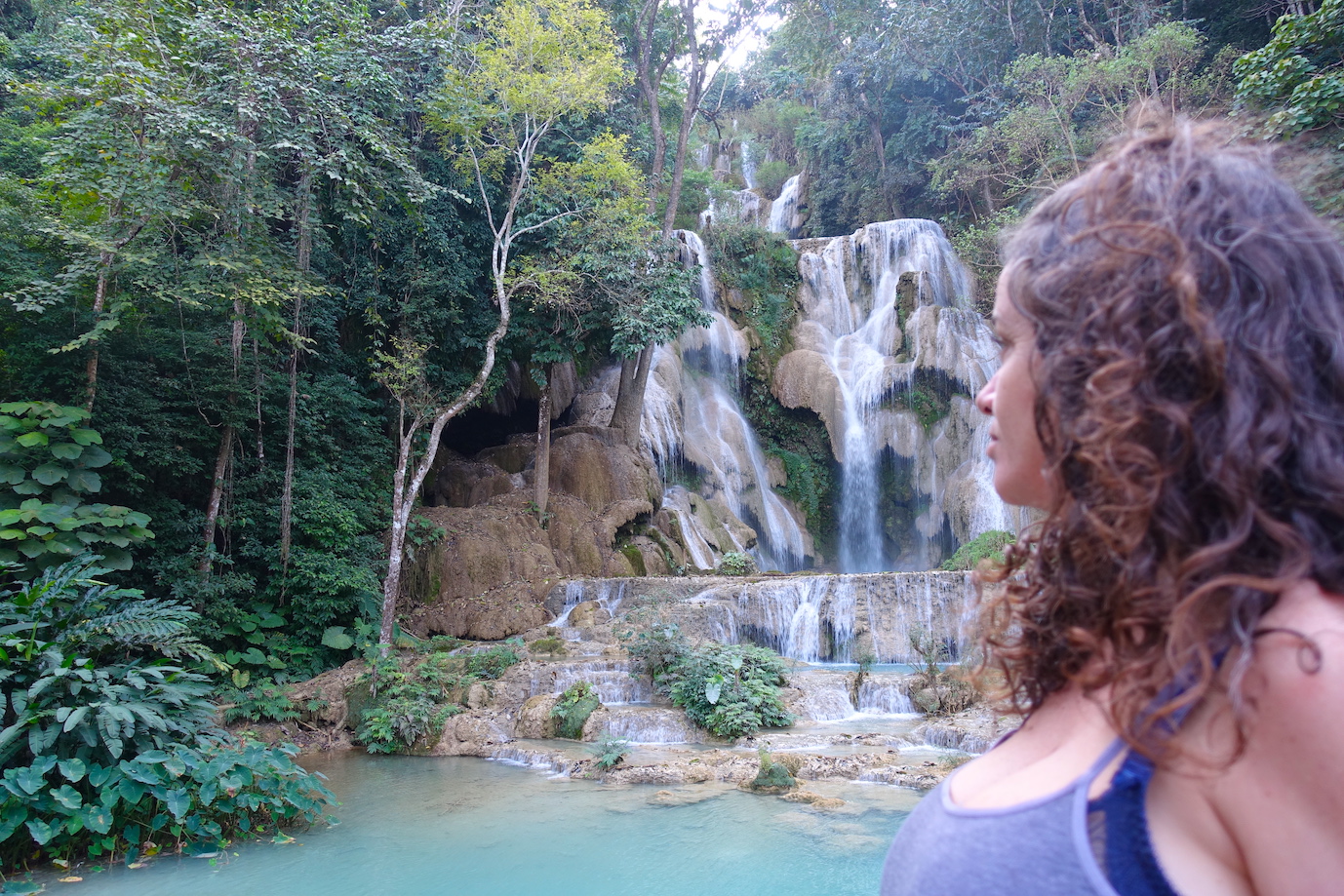
If you’re wondering whether Luang Prabang deserves a place on your Laos itinerary, I have written a complete guide covering the best things to do in the city and whether I think Luang Prabang is worth visiting.
Pak Ou Caves FAQs
Frequently Asked Questions About the Pak Ou Caves
Can I visit the Pak Ou Caves without a tour?
Yes, absolutely. Although I joined an organised tour during my visit, you don’t need one to explore the Pak Ou Caves. You can hire a private boat, take a shared slow boat from Luang Prabang or travel by road before crossing the river by local boat. If you’re an independent traveller like me, visiting without a tour is perfectly possible.
Why are there thousands of Buddha statues inside the Pak Ou Caves?
For centuries, pilgrims, local worshippers and members of the Lao royal family have left Buddha statues inside the caves as offerings and acts of devotion. Today, there are more than 4,000 Buddha images of different sizes and materials scattered throughout the two caves. Walking among them feels less like visiting a tourist attraction and more like stepping into a living spiritual tradition that continues to this day.
Can I take photographs inside the Pak Ou Caves?
Yes, photography is allowed inside the caves. The Lower Cave is naturally illuminated and relatively easy to photograph, while the Upper Cave is much darker and may challenge even experienced photographers. I would simply encourage visitors to remember that the Pak Ou Caves are still an active place of worship and to photograph respectfully.
Are the Pak Ou Caves worth visiting if I’m not Buddhist?
Absolutely. While my visit was particularly meaningful because I am a practising Buddhist, I believe anyone with an interest in history, culture or slow travel will appreciate the experience. What stayed with me wasn’t only the caves themselves, but also the journey along the Mekong River and the peaceful atmosphere that surrounds this sacred place. You certainly don’t need to be Buddhist to appreciate its beauty and cultural significance.
What makes the Pak Ou Caves so special?
For me, what makes the Pak Ou Caves so special isn’t simply the thousands of Buddha statues they contain. It’s the combination of everything: the boat ride along the Mekong River, the centuries of history preserved within the caves and the feeling that pilgrims have been making this same journey for generations before us. In a world where we often rush from one attraction to another, the Pak Ou Caves invite you to slow down. Sometimes, the journey really is every bit as memorable as the destination.
Final Thoughts
The Pak Ou Caves turned out to be one of the biggest surprises of my second visit to Laos. Before arriving in Luang Prabang, I had never even heard of them, yet they ended up becoming one of the highlights of my trip.
For me, visiting the Pak Ou Caves was much more than simply exploring another tourist attraction. It was about slowly cruising along the Mekong River, discovering a place that has welcomed pilgrims for centuries and standing among thousands of Buddha statues in one of Laos’ most sacred Buddhist sites.
Would I recommend visiting the Pak Ou Caves? Absolutely. While they may not impress travelers looking for gigantic cave systems or adrenaline-filled adventures, I believe they offer something far more meaningful: a beautiful combination of history, culture and spirituality that is uniquely Lao.
If you’re visiting Luang Prabang, I think the Pak Ou Caves are well worth adding to your itinerary. Just don’t rush the experience. Sometimes, the journey is every bit as memorable as the destination itself.